Dixon Place, NYC
June 7 2026
Reviewed by Dhruva Lakshminarayanan for Line & Verse
Image credit: Maayon Visuals
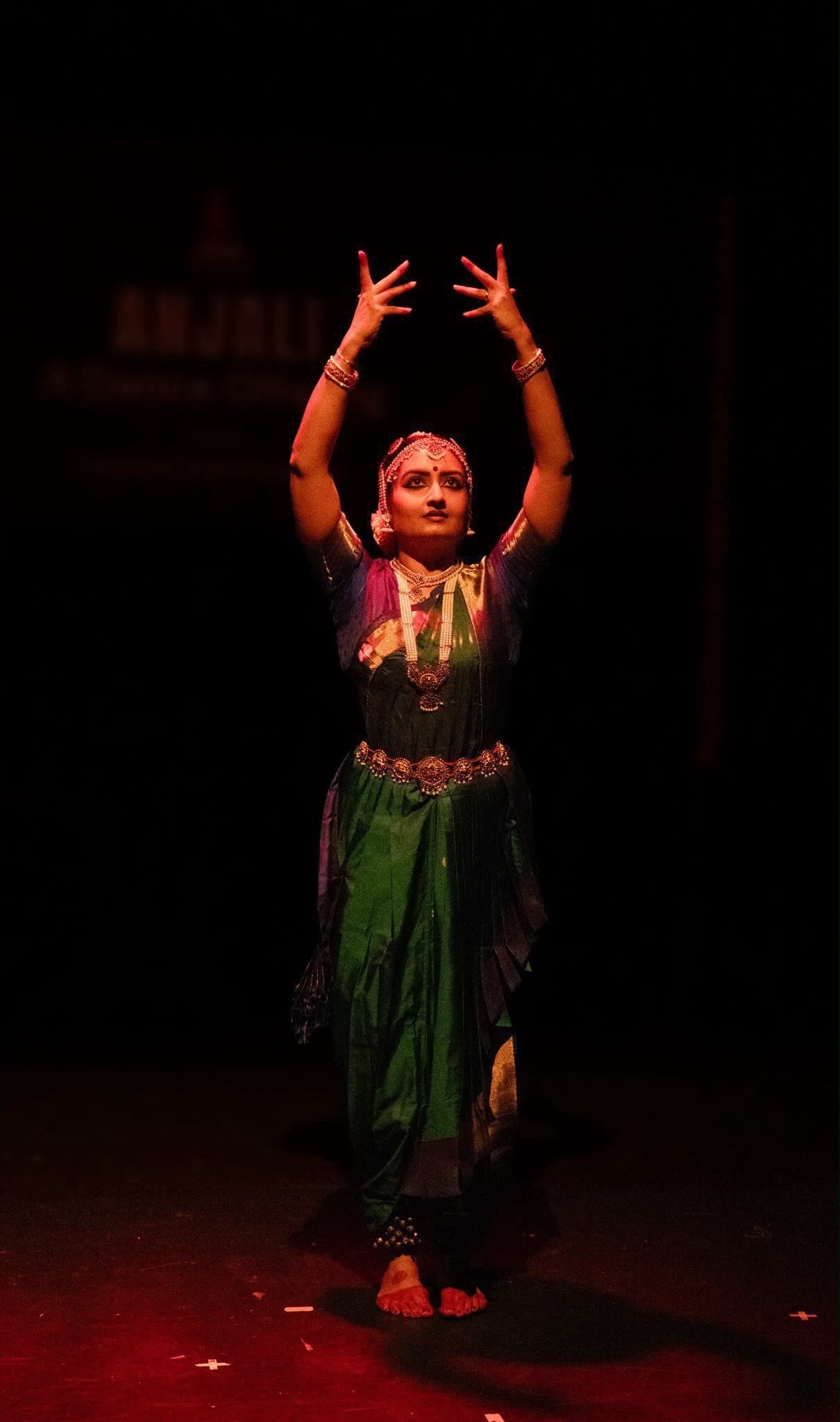
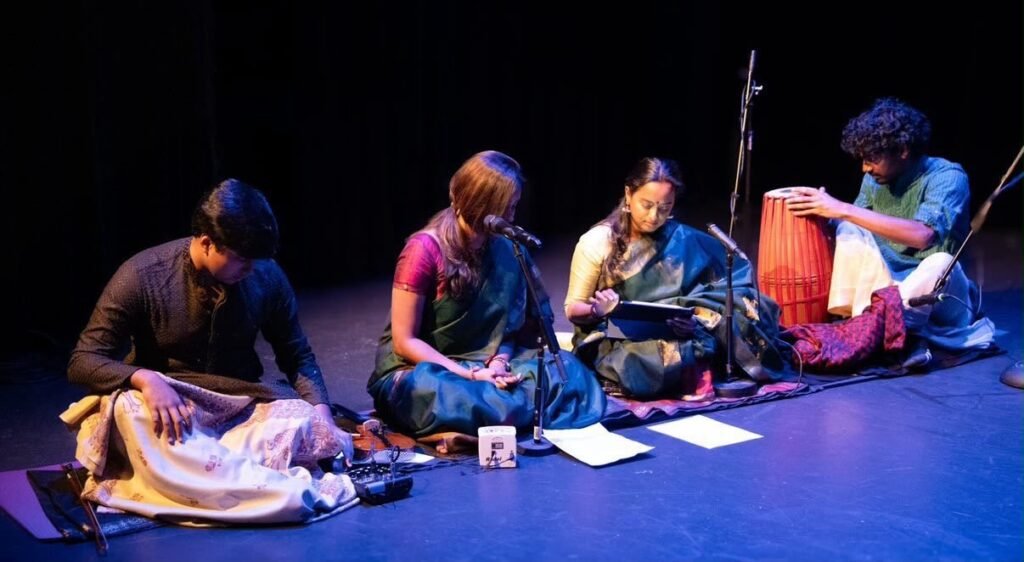
On a sunny summer afternoon last week, after multiple train delays, I dashed through the hallowed halls of the Dixon Place in the Lower East Side of Manhattan to witness Anjali, a solo bharathanatyam showcase by Sneha Subramanian, accompanied by Radhika Krishnaraj on the vocals, Pranav Manjunath on violin, Siddharth S Ragavan on the mridangam and Sri Thina Subramaniam on the Nattuvangam. The event was a part of the annual student showcase of the Temple of Fine Arts, helmed by Sri Thina Subramaniam.
As I seated myself amidst the cacophonous crowd, the melodious voice of Krishnaraj enveloped the august gathering with a soulful bhajan penned by Saint Tulsidas, Gayiye Ganapathi, setting the stage and instantly commanding everyone’s attention, urging them all to settle down before the dancer made her entry.
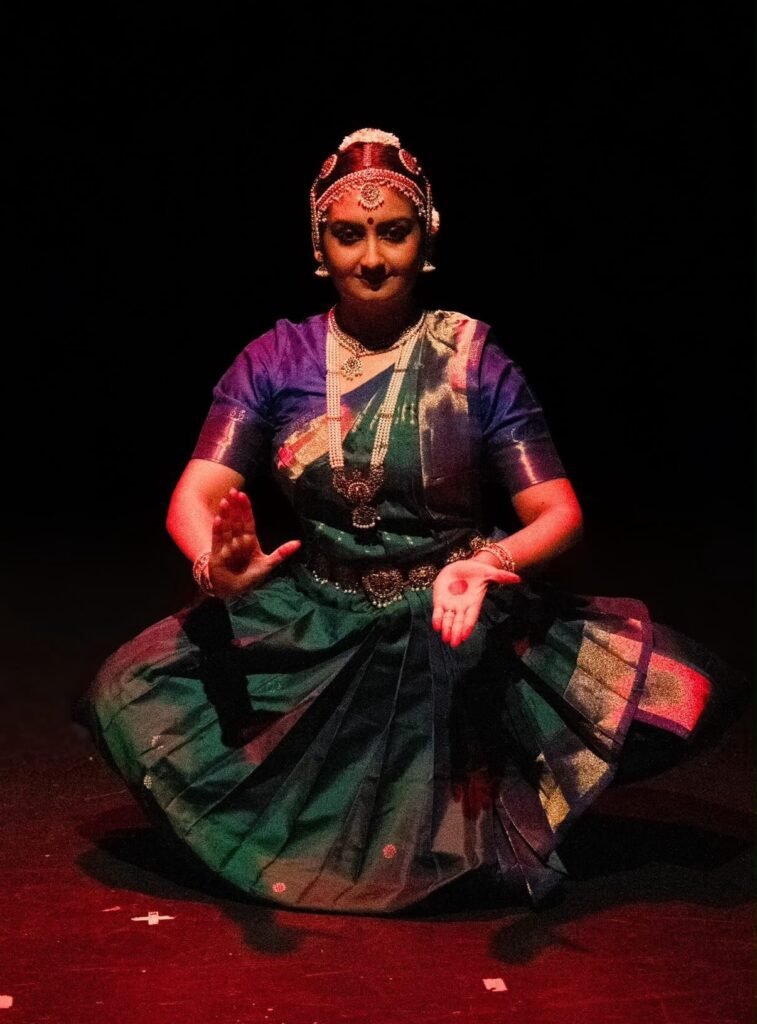
The piece that followed this was Mathe Malayadhwaja, a very traditional and popular daru varnam in praise of Mahishasura Mardini, the slayer of the demon Mahisha composed by Harikeshanallur Muthaiah Bhagavatar in raga Kamas set to Adi talam. This was preceded by the first few lines of the sacred chant, Ayi Giri Nandini.
Now, in a conventional Bharathanatyam repertoire, the dancer would perform three to four other pieces before they moved on to the varnam, usually the longest and most intricate piece combining all three pillars of bharathanatyam: nritta (pure, rhythmic dance), nritya (expressive narration of the lyrics) and natya (dramatic interpretation or storytelling), so it was nice in this particular case for the narrative to be flipped slightly and to dive right into the meaty piece.
The varnam had woven together a ton of very interesting moments: one of the sancharis, or storytelling sections, very creatively depicted the dancer happening upon the Goddess, who, while being the epitome of beauty, was adorned with ghastly skull necklaces, bows, arrows, knives and dishevelled hair, which displeases her. She went on to replace these unsightly elements with flower garlands, musical instruments and the moon to bedeck her hair. Another inimitable moment was a jathi, a rhythmic sequence paired with intense footwork, choreographed to illustrate the goddess adorning herself with jewels. Unfortunately, these beautiful moments were somehow not cohesive as a whole, as the buildup was not strong or dramatic enough to spotlight these elements, and synchronization between the nattuvangam, the dancer and the musicians left much to be desired. For example, the penultimate sanchari depicting the war between the Goddess and the demon started off strong, with Sneha effortlessly playing both roles with elan, however just as the roles, the space and the mood were starting to get established, the dancer quickly killed the demon and concluded the piece with a cleverly timed, but very awkwardly executed ‘jaya jaye he Mahishasura Mardini” which marred the potential impact and reach of the piece. More rehearsals and strategic coordination between the performing artists in future iterations could allow this piece to truly shine.
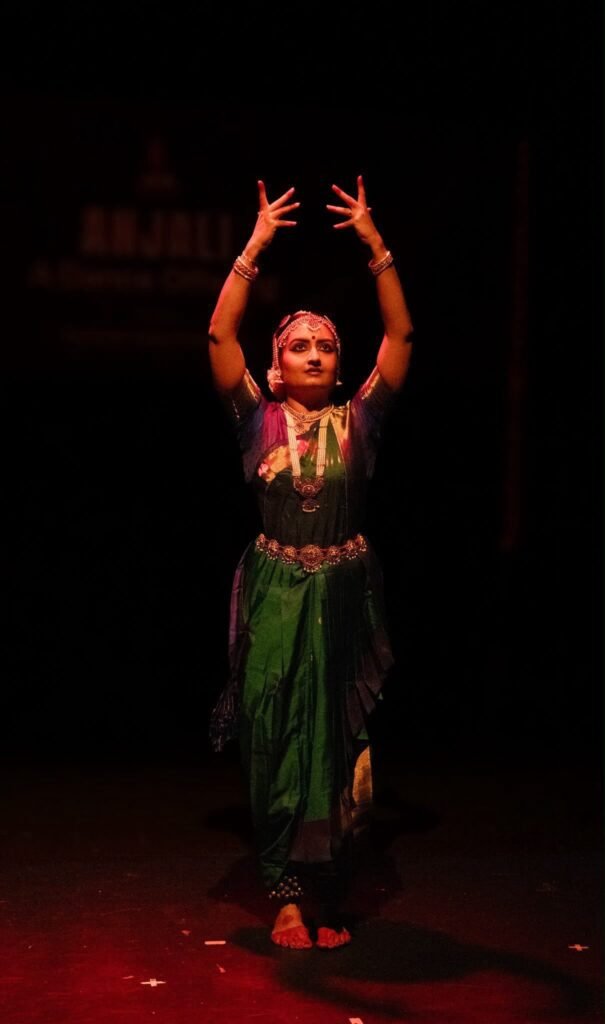
The next piece presented was Smara Sundara Guni, a Javali, or short, expressive song focussing on romantic emotions, in raga Paras, which for me was the highlight of the evening. Through this song, the heroine, who is besotted by her lover, can’t stop extolling his praises, much to everyone else’s annoyance. Sneha pulled off the role, setting the stage by embodying the body language and expressions of a highly narcissistic woman with just the right balance of adulation and contempt in her abhinaya, only proceeding to make everyone and their mother know that her husband was the best in the looks department, bought her the best gifts and played the veena like Goddess Saraswati herself, and, particularly that nobody could survive telling her otherwise. An absolute joy to watch come alive on stage! What was a little confusing initially, and took some time to establish, was if the Nayika was pompous, egotistical and self important herself, or if she was proud of her husband’s achievements, and the chatGPT-esque blurb muttered by the MC at the beginning didn’t help. What could have helped better is if the dancer or the Guru had taken the time to explain each piece clearly to the audience with expressions and hand gestures to further elucidate what was to unfold.
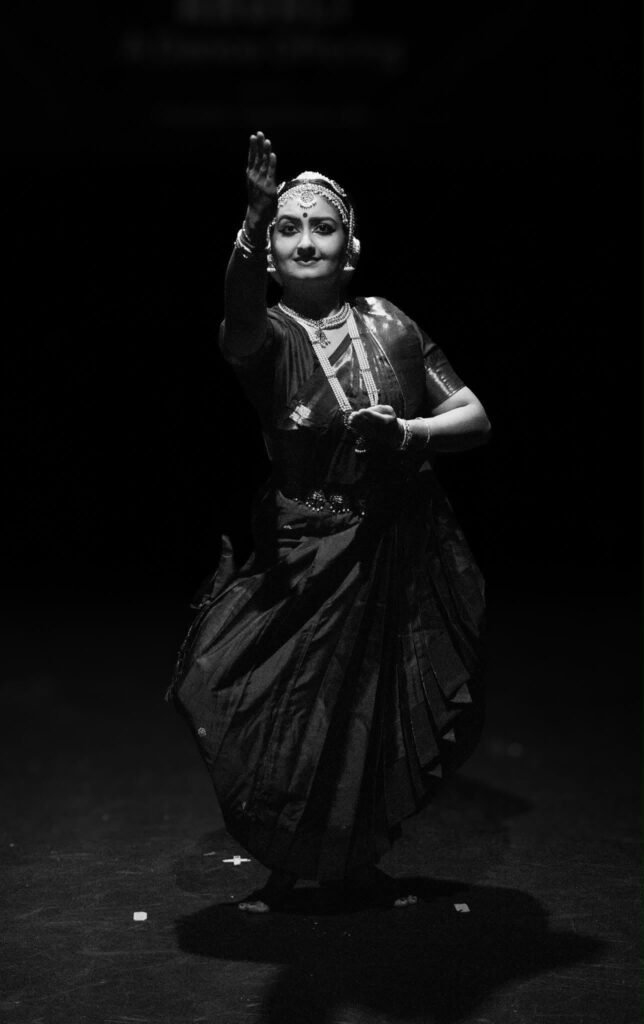
The piece that followed was an Ashtapadi, Yahi Madhava Yahi Keshava in raga Sucharitra, which explored the anguish of the jilted lover, Radha, as she discovers that her beloved, Krishna, has spent the night with another woman, and the rage with which she confronts him as he squirrels his way back to her house after the act. A somber piece explored very emotionally by Sneha. One particular segment remained with me, where in one swift movement, Sneha was able to convey three disparate emotions: the “other woman” enticing and alluring Krishna with her charms by throwing flowers at him, Krishna getting attracted by her advances and Radha’s disappointment. The beginning and end were particularly strong, revealing thought and intent behind the depictions; She commenced the piece by removing all her adornments, indicating that she had bedecked herself for his pleasure moments before, but now was too disappointed to care anymore, and ended by closing the door to his face and walking away from the spotlight. What was very evident through the afternoon was the emotive range of the dancer. Sneha chose radically different emotions to portray in her pieces: valour in the varnam, intense love, pride and arrogance in the Javali and lastly, sadness and despair in the Ashtapadi, revealing her tenacity and command over the abhinaya
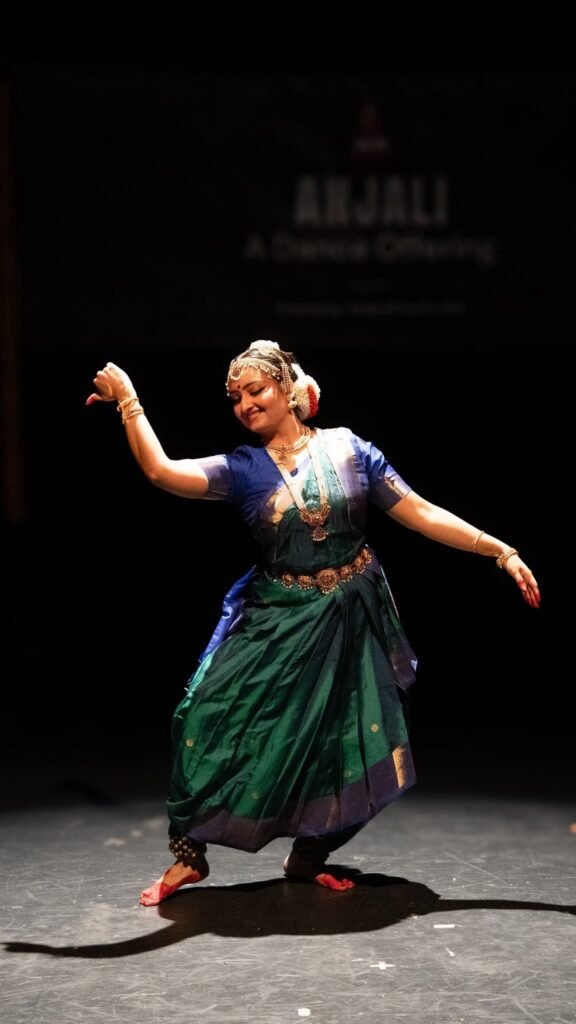
The last piece of the evening was the Thillana in raga Sivaranjani set to Adi tala, composed by Maharajapuram Santhanam, which was where, in my opinion, most of the holes in the performance were visible. Growing up, we referred to the Thillana as “Thrill-ana” because of the way rapid footwork, rhythmic jathis, and lively movements are interwoven to create a thrilling finale that leaves the audience spellbound. Here, however, the choreography unfolded at a comparatively restrained pace, diminishing its climactic energy.
More critically, coordination between dancer, nattuvangam, and musicians faltered at several points. At one stage, the vocalist paused and the nattuvanar had to step in to recite the shollukettu (rhythmic sequence, not usually recited out loud during a thillana) to re-align the ensemble, an intervention that, while functional, disrupted the intended momentum of the piece. The Nattuvannar in a bharathanatyam performance plays the role of a sutradhar, the structural anchor between the dancer and the musicians that ties the entire performance together, and when that alignment weakens, the performance can quickly lose cohesion.
That said, the performance as a whole still revealed significant promise. With more integrated rehearsal and tighter ensemble synchronization, particularly in rhythmically complex sections, the work could achieve a far more compelling impact.