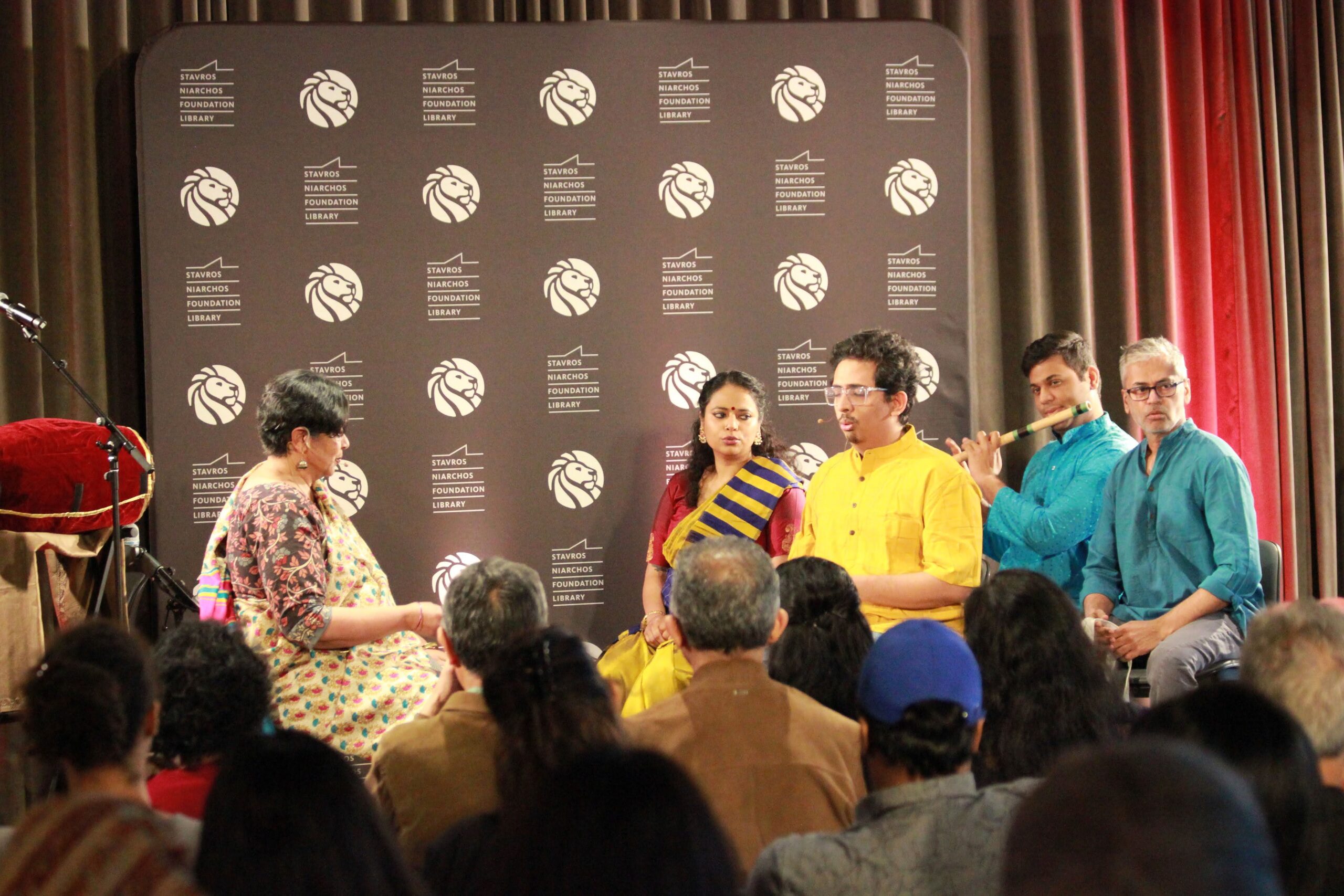
New York Public Library (NYPL), Stavros Niarchos Foundation Library (SNFL)
April 3, 2026
Reviewed by Dhruva Lakshminarayanan for Line & Verse
Image credit: Siddarth Hanumanthu
It’s 6:00 am on a Tuesday morning. Your parents have somehow managed to disrupt your peaceful slumber, get you dressed and drop you at your pattu (carnatic music) class before heading to school. As you walk in all grumpy and irritable, you’re wished a good morning by the nectarine notes of the Venkateswara suprabhatham flowing through your ears, and just like that, your mood instantly calms? That is the power of Rasa, the innate emotional essence woven into every little facet of the arts, forming the crux of a riveting evening explored beautifully in New York City by Kamini Dandapani, Vignesh Ravichandran, Visveshwar Nagarajan, Bala Skandan and Bharathi Penneswaran.
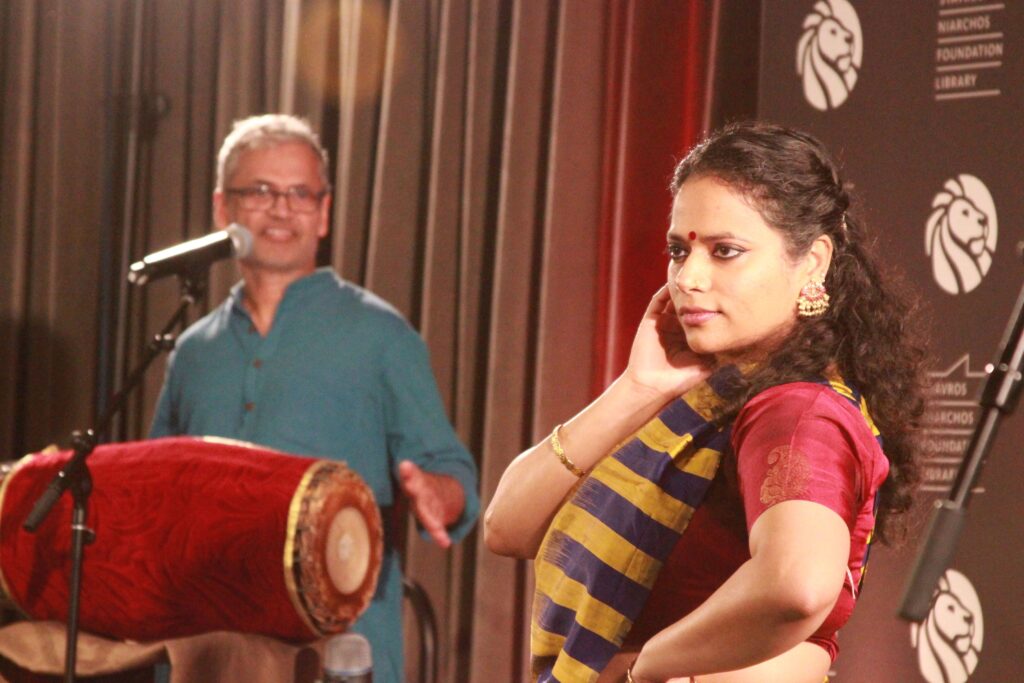
The scene of the aforementioned pattu class was immediately set as Kamini, who played the music teacher, walked into the stage hurriedly through the audience, hyperventilating as her students (the rest of the cast) were all late. As they all trickled in one by one sleepily, settled down and listlessly started singing the Kunda Gowra geetham, she realized that she might have to delve deeper. Rather than making her shishyas just learn rote like most Gurus do, it was important to make them feel the essence of each line and understand the inner meanings. And so, she pulls out her brahmastra, her trump card: her one of a kind magic carpet. The kids were ecstatic!
Instantly we were transported into a whole new world through Visveshwar’s flawless rendition of the indelible Aladdin song: to the musically enriched world of Purandara dasa at the Virupaksha temple; To Thanjavur, where the famous quartet shaped a gargantuan chunk of what we know today as Bharathanatyam with pieces like the Sarasijakshulu shabdam, performed effortlessly by Bharathi; To Madurai where Muthuswami Dikshithar composed Meenakshi Memudamdehi, one of his 500 credited compositions, rendered with immense grace and devotion by Vignesh; in addition to many more places, emotions and stories.
As a concept, watching this unfold on stage was engaging as it brought together multiple realms of the performing arts: dance, vocals, instruments, improv comedy, drama and storytelling, all bunched up into a beautiful bouquet and bound together through the bow that is Rasa. Many parallels could be drawn with the Harikatha/Kadhakalakshepam tradition of walking a tightrope between narrative and music, where nothing is out of balance. Especially for the duration of an hour, there wasn’t a single dull moment, as all the individual artists had a tight grasp of their respective fields, and were also able to play into the dramatics convincingly enough to connect the disparate elements together.
Audience engagement was a key part of the evening, whether it was by Bala getting everyone to recite the konnakol (the south indian artform of performing percussive syllables vocally), as he played the mridangam, or the way they ended the evening with reverberations of the simple yet earworm inducing nottuswaram. In some much smaller, less intentional moments too, the cast was able to make the audience feel a true sense of belonging through their jokes, reactions, and anecdotes. The choice to not just stick to very traditional carnatic themes and also explore the largely universal emotions of love, anger and jealousy, as well as songs and beats deeply encrusted within folk music truly amped up the relatibility quotient.
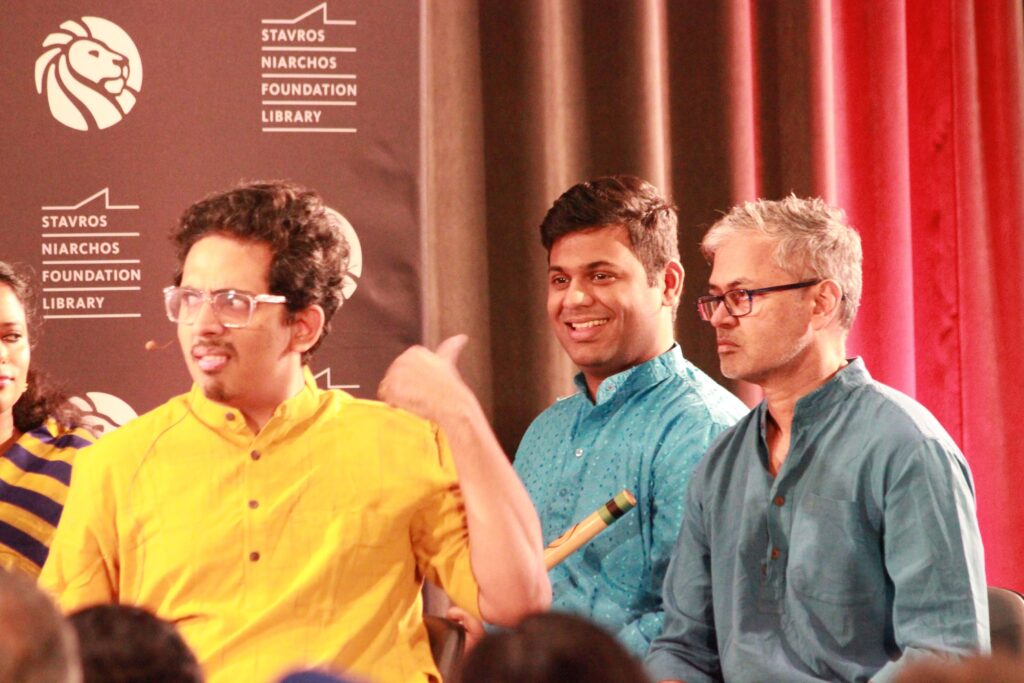
Something that might have augmented this evening even more might have been a more immersive stage/ context setup: A more engaging slide presentation, a background music score depicting the sounds of each region to evoke even more sentiments from the audience, smells of local food/flowers, an actual carpet and maybe some other props and costumes. Small gestures to contextualize each location more might have added some much needed pause and restraint before whizzing past. Perhaps the next iteration is longer than an hour, so that everyone involved can be given the time to get into the thick of it.
With regards to the storytelling, the spontaneous improv quality that we saw glimpses of in brief interactions: Bharathi challenging Bala to emote through his mridangam and him getting angry and almost throwing the tuning stone at her, shone through as some of the strongest moments of the show. Might have been really nice to see more of those moments, with all the cast members embracing that side of them even more, as it truly was a joy to watch.
All in all though, the evening, as promised, was a true escape from the hustle and bustle of NYC into a magical carpet ride through rasas, ragas, talas and bhavas. Kudos to the team for coming up with such a unique concept, and hopefully this is a starting point to many more performances, charting many new, unexplored trails every time.