Images credit: John Slemensk
Sanjeevni Iyer attended Prathiba Batley’s new solo work ‘A Thousand Paper Cuts’, and met up with the artist later to discuss the making of the piece.
“The one who raped me at six was a Mudaliar. Then one who groped me at fourteen was an Iyengar. The one who sexually harassed me in the USA was an academic, a PhD holder.” These are the words Dr Prathiba Batley shared on her social media when making a wider point about how rape is not defined by caste, race or education, but rather by the person who commits it. This very message was conveyed in her latest dance production titled “A Thousand Paper Cuts.”
Staged at Lawrence Batley Theatre in Huddersfield, the production draws on Batley’s deeply personal experiences and places them within a wider conversation around sexual harassment, violence and fear that resonates with many women. What started as an extension of her 2023 short film, ‘Dirty Secrets,’ developed into an hour-long production shaped by her personal experiences and a letter she wrote to herself. This letter, which was also available for the audience to take home, began with “I am sorry. Sorry that I failed you again and again.” This line stayed with many in the room because it was not an apology directed towards those who harmed her, but at herself. It was a recognition of the self-blame and judgement that often accompany trauma and experiences of sexual violence. This letter gradually unfolds into the realisation that it was never the survivor’s fault, initiating resonance that went beyond Batley’s own experiences.
On the day of the performance, the audience was intentionally made up entirely of women. This created a sense of solidarity that grew as the performance unfolded, with shared anger and relatability in the room. “Because it was all women, it felt like she wanted to create a sense of sisterhood,” an audience member shared. That sense of sisterhood carried beyond the performance, giving women the confidence and the support to speak openly during the post-show discussion, share their own experiences and discuss the emotions that the production brought up.
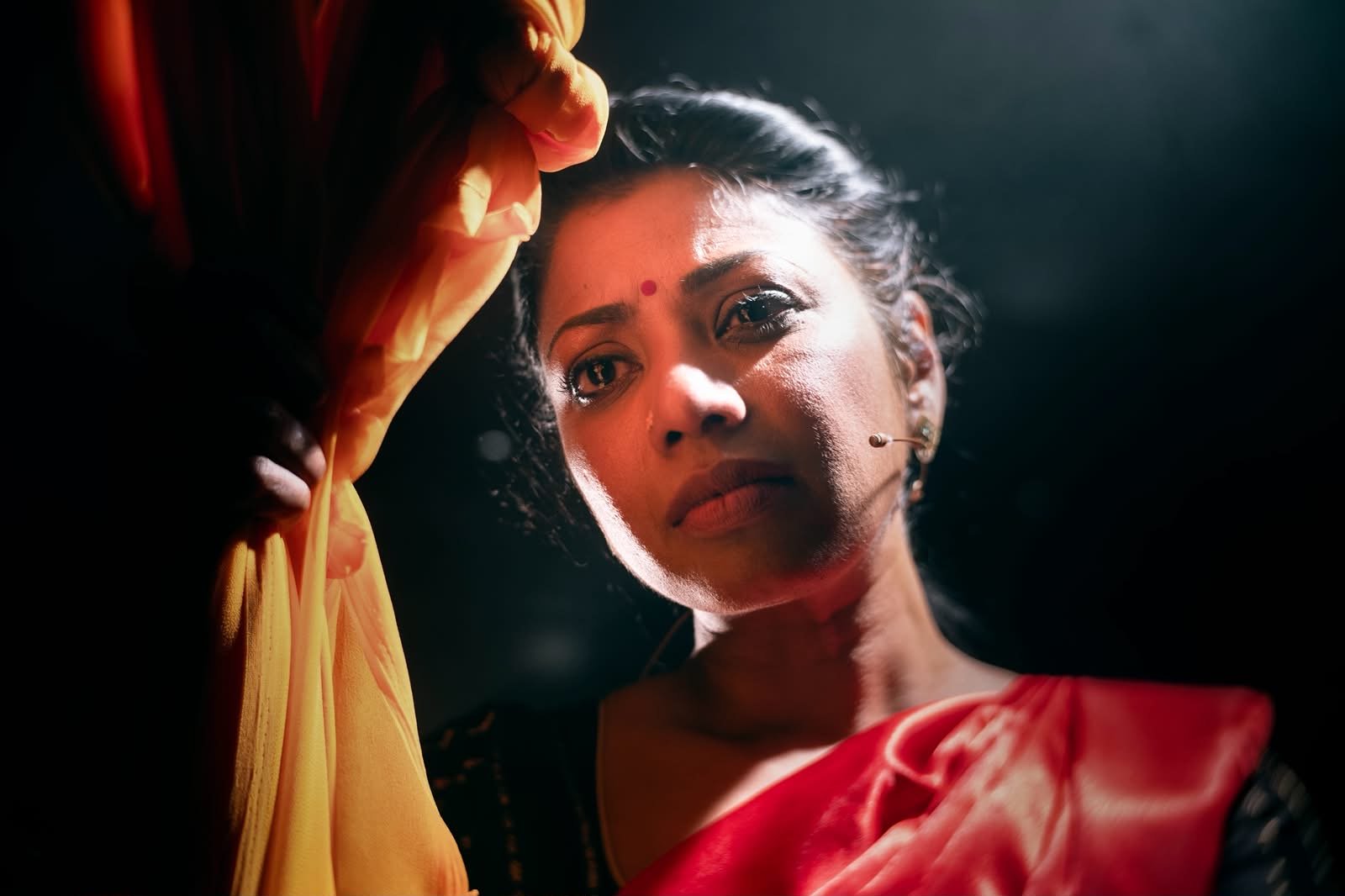
To further build this solidarity, Batley chose a close-up setting, with the audience seated near the stage, allowing them to follow every emotion expressed through her face and her movements. “I invited only women and chose this setting deliberately because I wanted to create a space where the audience could feel safe and connect with the story on a more personal level,” Batley shares. That intimacy and safety became especially important as Batley moved through different stages of her life, blending realism with creative expression. Using bharatanatyam, koodiattam, kathak and kalaripayattu, she moved through birth, childhood, adulthood, sexual violence and its aftermath, with each form bringing a different physical language to the production. The choreography was particularly striking because it did not just portray her story but also seamlessly expressed the distinct emotions of fear, anger, resentment, confusion, and vulnerability that followed. Batley also portrays the anger and resentment she reflects on, asking herself, ‘If only I could fight them.’ She channels this through kalaripayattu-inspired and yoga movements, with jazz music accompanying the sequence. The use of contrasting art forms throughout the production, Batley explains, reflects her intention for the production to move beyond one culture or tradition, reinforcing her belief that sexual violence is not bound by race or a cultural identity.
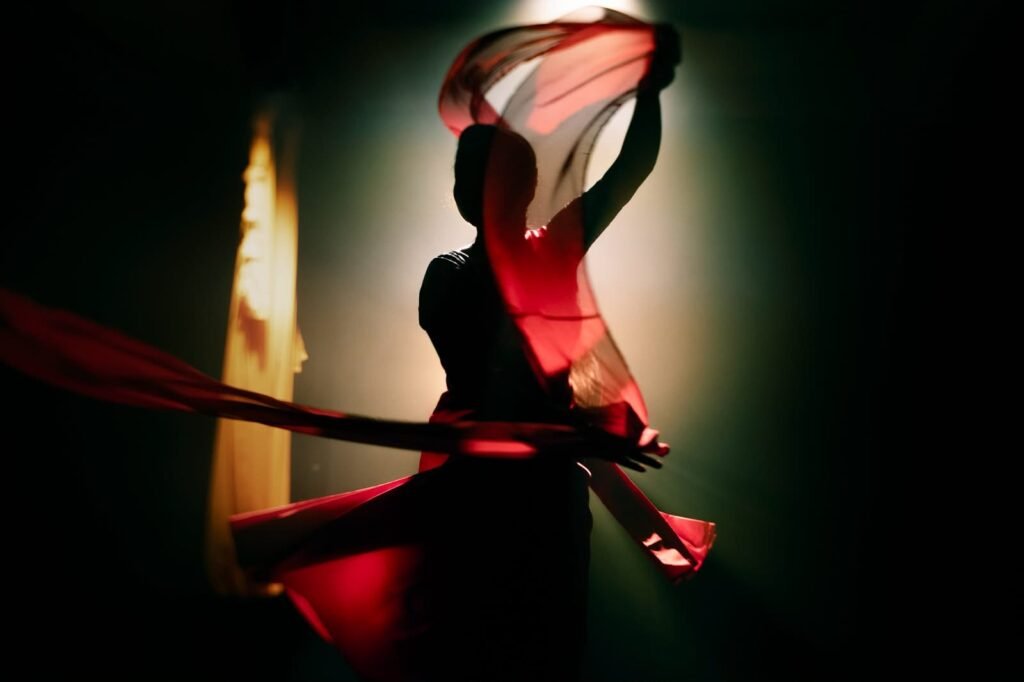
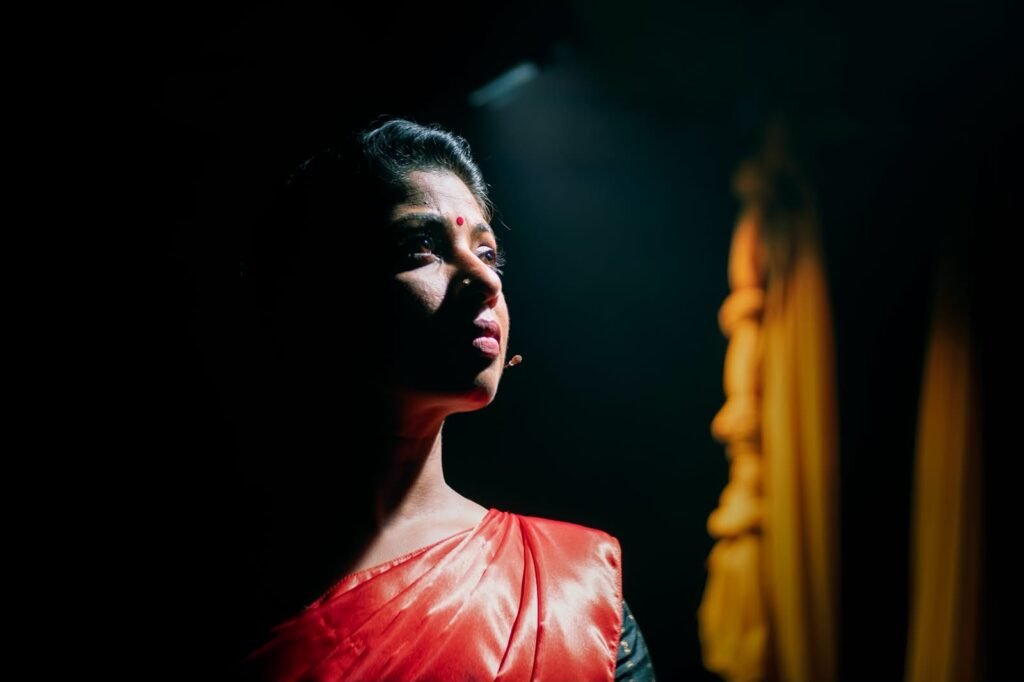
The mood for the production was set even before Batley came to the stage. It began with a dim yellow light and soft music in the background, immediately creating a sense of anticipation within the audience. Matching the rhythm and almost every emotion expressed throughout the production, the lighting was truly the highlight of the show. James Clare, the production’s lighting technician, read the entire script, attended and recorded the rehearsals to understand how the lighting could work with Batley’s movements. The final output reflected this intricate preparation, as it matched not only the mood of the production but also every beat, pause and transition in the choreography.
The music for this choreography, which was a blend of raga based music and jazz forms, was the hardest part of the production, according to Batley. Working with India-based composer T.H. Thiyagarajan, it took her eight months to create because it was not only a unique blend of Western and traditional Indian style of music, but also seamlessly worked around the pauses in her choreography and the monologues she delivered between the movements. Together with her co-choreographers, mentors and the team at Lawrence Batley Theatre, Batley unfolded every part of her life, including birth, childhood and experiences of sexual violence, with creativity and sensitivity. To further support the audience members who may have found the subject matter distressing, the team placed contact details for mental health services on every chair and made a quiet room available in the theatre for anyone who needed to step away from the performance.
The production ends with Batley crying as she sings a lullaby, returning to the image of the little girl at the beginning of her life. This represented how that innocent girl was now carrying the weight of everything she has experienced, bringing the production to full circle. When asked how she manages the emotions of performing the piece, she describes it as being sometimes intense because of “trauma relapse”, although at other times, she says, “I’m just a socially engaged dance theatre artist.”
Towards the end, Batley also tears small pieces of paper with the hateful comments she had earlier received on her short film and shreds them, exploring how something that began as a written record of pain becomes a physical act of release. To this, an audience member says, “When she tore those papers, it looked like rose petals.”
Batley now plans to create a Tamil version of the production and perform it in Tamil Nadu, saying that the story “hits different in your mother tongue”. She hopes to use the production to increase awareness about sexual assault in India. The impact of the production is already moving beyond the stage, as Batley mentions that the Bradford Rape Crisis Centre now wants to use the letter as a handout for survivors at its office, turning something that began as a deeply personal reflection into a broader form of social support and engagement.
This production truly explored sexual violence in its rawest and most personal form, which did not just help the artist explore her creativity but also voiced a story or an emotion for every woman in that room.