By Sanjeevni Iyer
I felt like I was back home.
There is something about being in a room full of dancers and teachers that I don’t think I’ll ever get tired of. The excitement of watching performances, scribbling down notes to capture every little detail, and exchanging observations with classmates or your guru was all the more familiar as I looked around at the many students accompanying their teachers or parents at Trinity School in Croydon. It reminded me of the dance festivals I grew up attending in India. That familiarity and exposure to learning and watching various Indian classical artists was also the vision with which Shalini Shivashankar, the founder of Upahaar School of Dance, started Nrithya Upahaar in 2013.
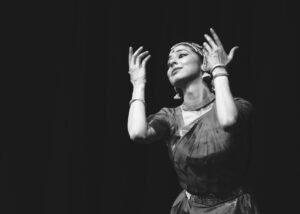
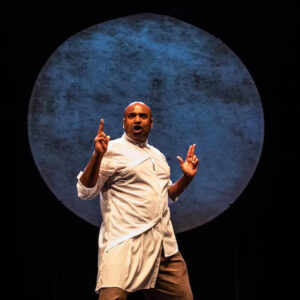
A biennial international dance festival, Nrithya Upahaar brings together various Indian classical dancers from across the world in one room, creating a space for performers, teachers, students and audiences to engage with and promote the heritage of classical dance forms. This year featured multiple renowned global and local artists, including Renjith Vijna, Pallavi Anand, Thomas Vo Van Tao, Parshwanath Upadhye, Shruti Gopal and Adithya PV from Punyah Dance Company.
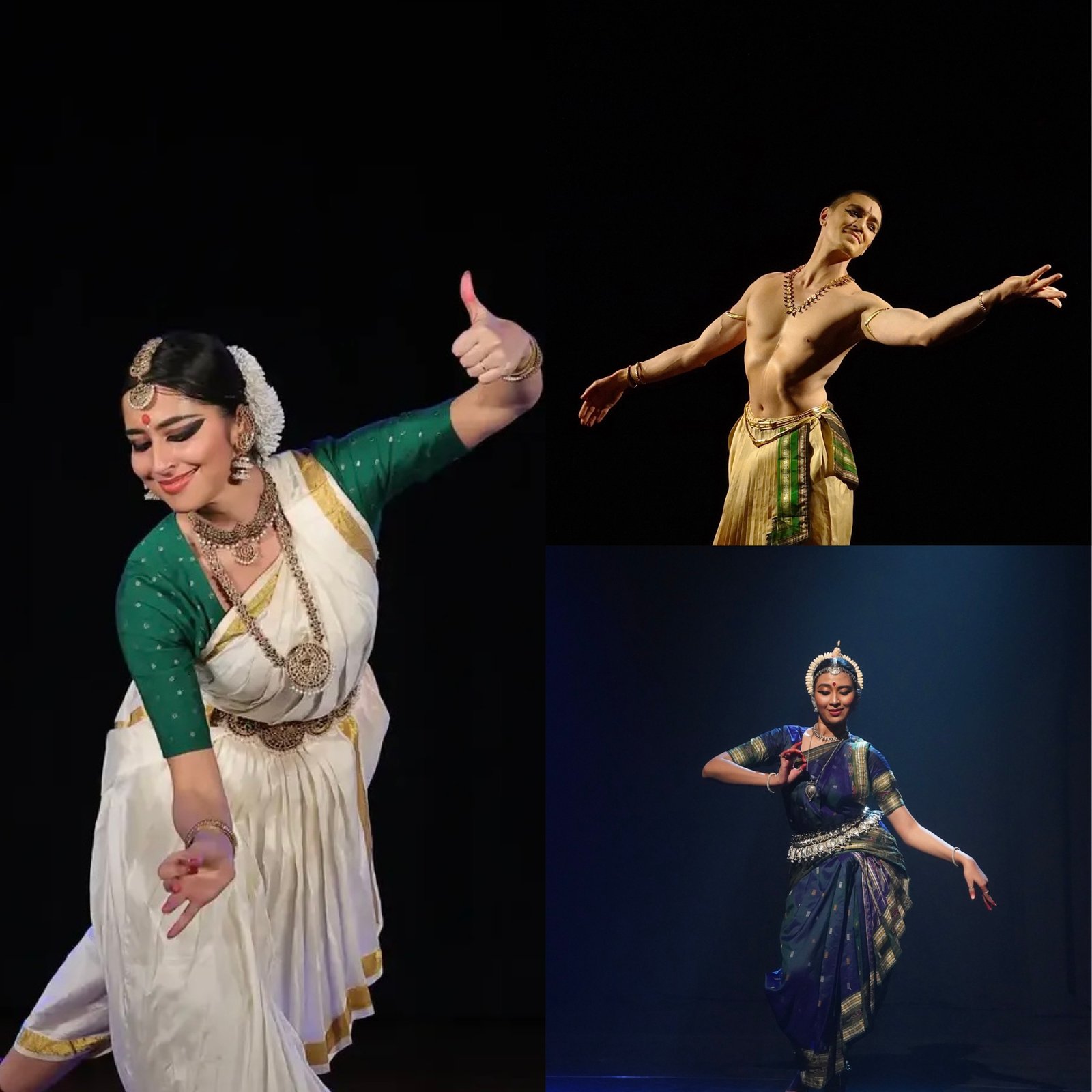
Day One brought together three dance styles: bharatanatyam by Pallavi Anand, mohiniyattam by Thomas Vo Van Tao, and odissi by Akankshya Padhi.
Pallavi Anand- Varnam:
Pallavi Anand opened the festival with an hour-long Varnam, set to Raagam Neelambari and Taalam Adi. Anand told me that she was first drawn to the piece after watching her mother, Shalini Shivashankar, perform it as a double bill of bharatanatyam and mohiniyattam in Bahrain. When she began choreographing it herself, “It felt like home, something I was familiar with,” she shared.
As an audience member, I was intrigued by how she brought together mohiniyattam and bharatanatyam, while weaving in subtle nuances of odissi. What particularly caught my attention was the way she choreographed the jathis, exploring different movement patterns, layas and combinations of adavus. Her play with the rhythmic patterns of the song was equally engaging. I vividly remember her portrayal of playing the veena in the second half, where her movements mirrored the karavais (pauses) in the composition.
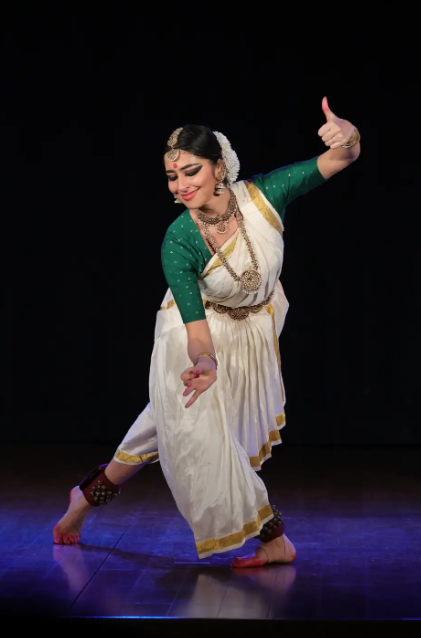
Image Credit: Aswin Vijay
When I asked how her training under different gurus had influenced the choreography, she reflected, “At some point in your life as a dancer, all your teachers start speaking through your performance. This Varnam reflected exactly that.” Anand explained, describing how the choreography drew on everything she had learnt from her gurus, including her mother, the Dhananjayans, Mavin Khoo and Akram Khan.
Throughout the performance, Anand made deliberate and creative use of the entire stage, something she later confirmed was an intentional choice. Her decision to present an hour-long Varnam was equally considered. “It’s very rare to get an hour slot of dancing as a performer in the UK today. When I got this opportunity, I wanted to ensure that I made full use of my time. And because this Ragam is also one of my favourites, I ended up doing that,” she said.
Thomas Vo Van Tao: Cholkettu, Varnam and Thillana
After Anand’s performance, Thomas Vo Van Tao, a French mohiniyattam dancer, offered the audience a different but equally immersive experience.
He began with a Cholkettu, an invocatory piece dedicated to Lord Ganesha, followed by a Varnam and a Thillana. His exploration of the Kamadahanam story (Lord Shiva burning Kama deva) from Shiva’s perspective was particularly striking. Watching this narrative unfold through mohiniyattam, a predominantly lasya-oriented form, gave me a fresh perspective on the story. It was interesting to see how its softer, more graceful movement vocabulary could bring out a different dimension of Shiva’s character and the narrative itself.
Thomas brought depth and crispness to his movements, balancing softness with technical strength. His abhinaya was subtle yet expressive, allowing the narrative to unfold without becoming overstated. I also particularly enjoyed the way he shifted between characters during the sahityam. The transitions were smooth, and his poses were remarkably well-defined.
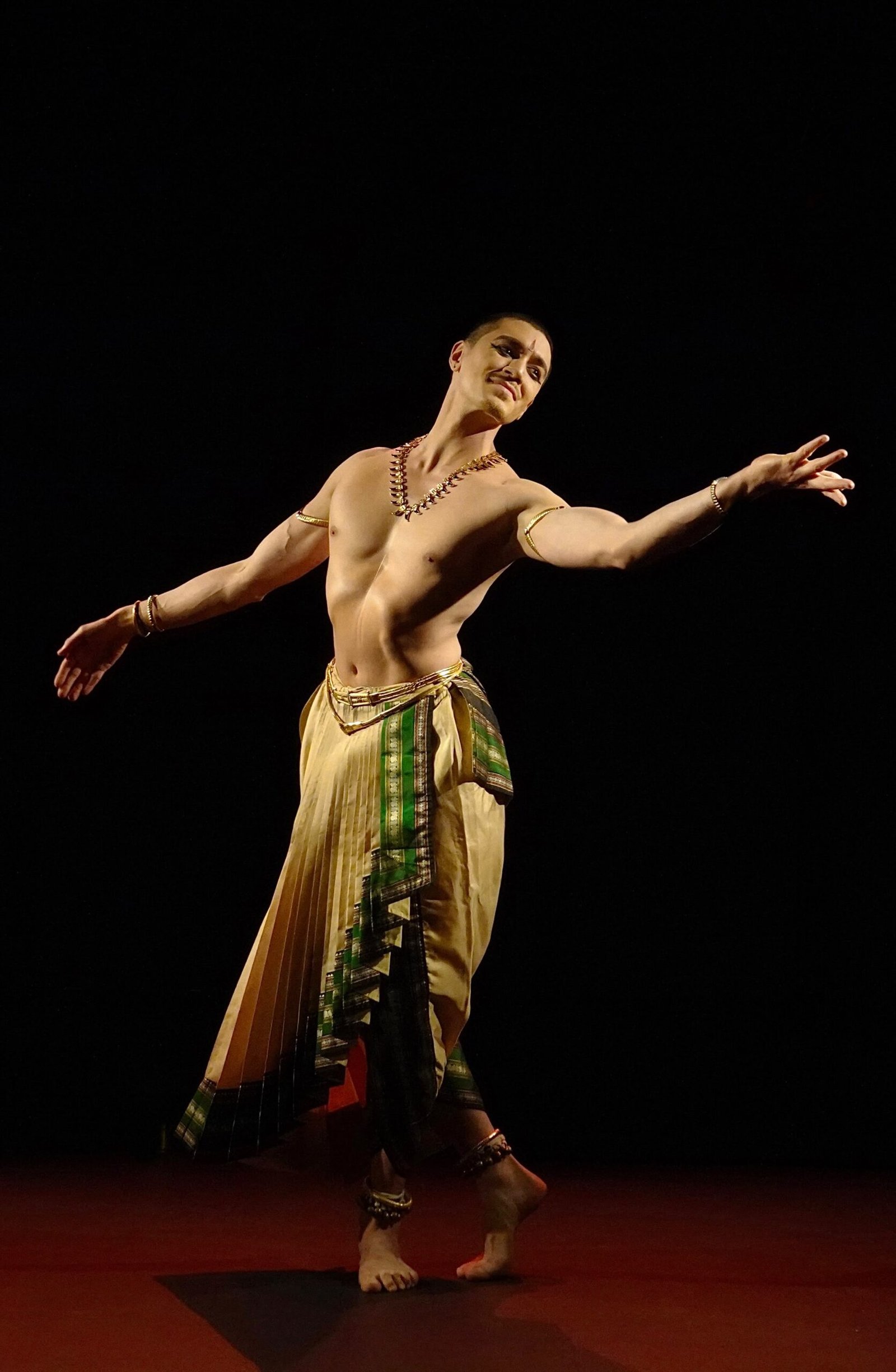
Image Credit: Jean G. Abadie
Thomas’s journey into Indian classical dance began after he watched a brief Bharatanatyam performance in a documentary on South India. He went on to learn the art form in France for a decade. Later, while travelling in Kerala, he decided to attend a mohiniyattam class out of curiosity. As he recalled in an interview with Flame University, the experience was “a sort of revelation”. He subsequently trained under Smt. Kalamandalam Hymavathi and continued his studies with the renowned exponent Dr Neena Prasad.
I also found myself noticing how closely his movements followed the rhythm of the music, while still making room for deliberate pauses within the choreography. Thomas spoke about how his love for Mohiniyattam came, in part, from the way the form asks dancers to slow down and observe. That quality was evident in his performance. There was a sense of patience in his movement, with each gesture and transition given the space to breathe.
Akankshya Padhi: Nataraj, Ashtapadi and Pallavi
Akankshya Padhi concluded the first day of Nrithya Upahaar with an odissi performance. She began with Nataraj, an invocatory piece dedicated to Lord Shiva, followed by kuru yadu nandana ashtapadi from poet Jayadeva’s Gita Govinda and a Pallavi in Raag Tilak Kamod.
Although a young dancer, Padhi demonstrated remarkable precision in her movements and an ability to hold the audience’s attention through her understated yet expressive abhinaya. What I particularly enjoyed was her approach to the choreography. Rather than relying on elaborate or exaggerated movements, she seemed to focus on their depth and subtlety. Her performance was soft and expressive, yet held a certain intensity.
She also demonstrated a lovely ability to hold her gaze and establish eye contact with the audience, using crisp movements and nuanced expressions to communicate the emotions of the composition. There was a balance of technical finesse and emotional depth in her interpretation of the Ashtapadi. Truly a delight to watch.
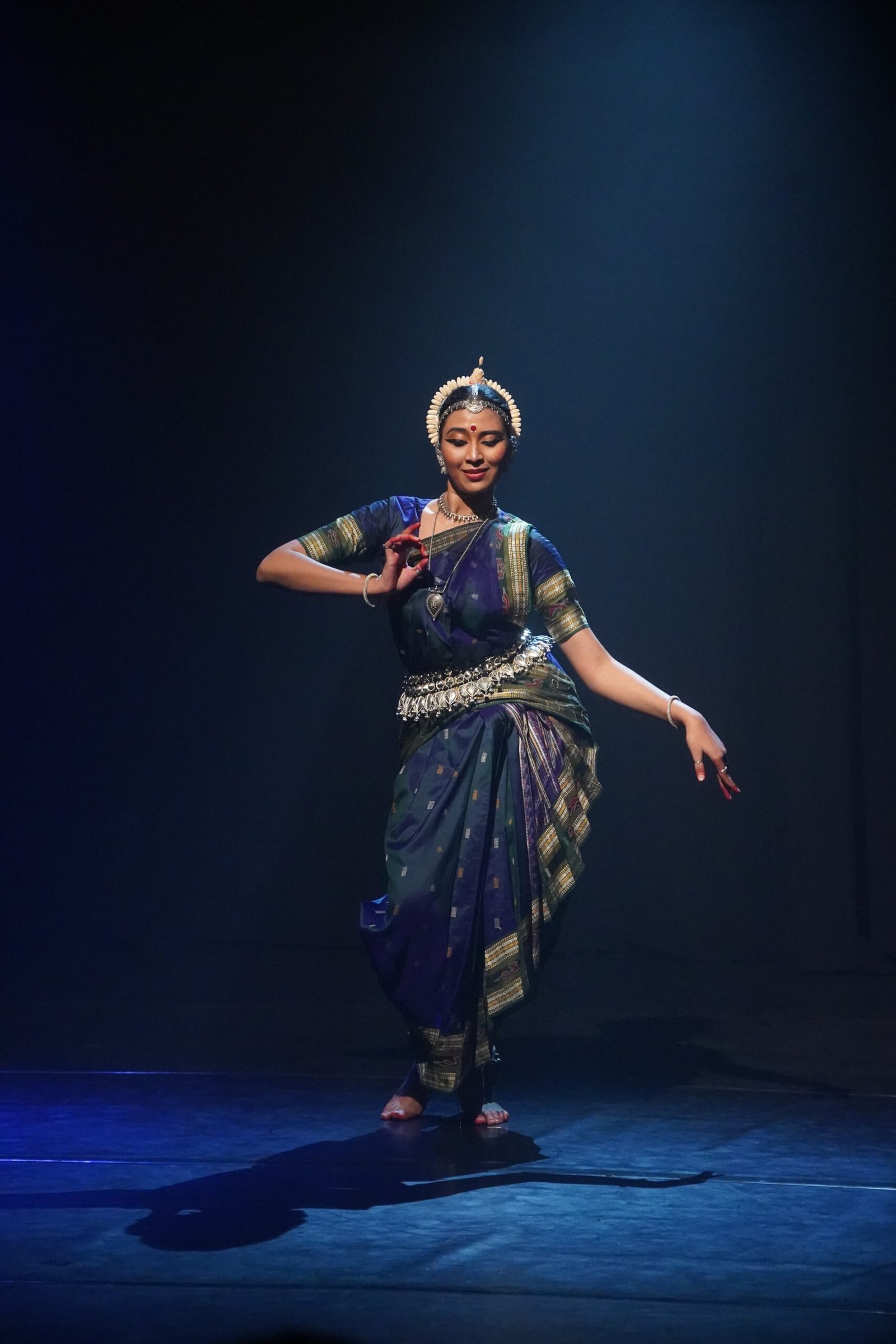
Image Credit: RN Sudhi
As I packed my notebook at the end of the performance, I found myself reflecting on these little moments from each performance, which, as a dancer, offered me something to observe, question and learn from. As dancers, watching someone else’s interpretation of the art form often reminds us just how expansive South Asian dance is, and how there is always something new to discover, a different approach to a movement to explore, or simply another way to enjoy the art form.
That was what I enjoyed most about this festival: the feeling of being part of a space where people came together to learn, exchange ideas and celebrate these art forms. Seeing young students watching their teachers and sharing their excitement truly brought back memories of the festivals I grew up attending in India.