By Sanjeevni Iyer
At three and a half years old, Ashwini Kalsekar walked to her mother’s studio with bells in hand and asked, “Is Rekhaji available to teach me dance?” From there began Ashwini’s journey in kathak.
Growing up in a house filled with art and creativity, Ashwini made her stage debut at the age of five, performing to Maiyya Mori Main Nahin Makhan Khayo.” Fondly recalling the excitement from that first performance, Ashwini also reflected on a lesson her mother taught her afterwards. She explained that at age five, she tried to improvise the abhinaya by suddenly sitting down on stage and crying to heighten the character’s expression. At that moment, her mother, Rekha Nadgauda, gently reminded her that discipline and understanding the art form and stage decorum come before improvisation.
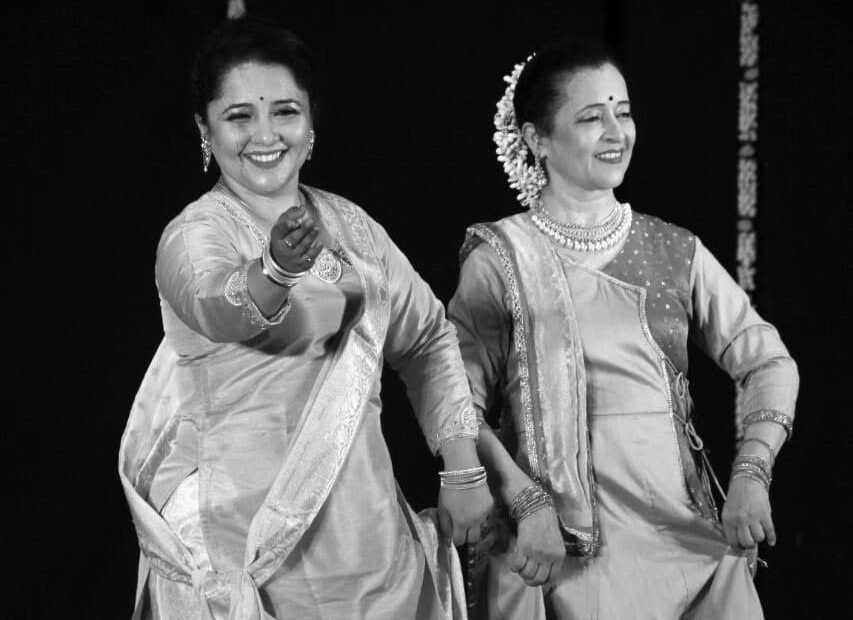
Keeping that lesson in mind, and with over three decades of professional experience in kathak, Ashwini is now an established artist, teacher, and choreographer. As she celebrates the 20th anniversary of her artistic journey in the UK, she is bringing that legacy to the stage through Virasat, a production bringing together three generations of kathak dancers. Presented for Kirti Kala Mandir UK CIC’s (KKMUKCIC) annual showcase, Virasat will take place on the 6th of December at The Bhavan, featuring her daughter, Siya Kalsekar and her mother, first guru, and renowned kathak dancer, Rekha Nadgauda.
Highlighting the core concept of the production is a poem by poet Nachiket Jog. This poem was written based on a synopsis by Ashwini, which describes how Kirti Kala Mandir was established by her mother 50 years ago, how Rekha ji’s daughters Ashwini Kalsekar and Aditi Panse carried her vision forward, and how Ashwini’s daughter, Siya, who is a budding artist, also steps onto the stage to honour what her Aaji (grandmother) began. Crucially, the poem frames the institution’s core ethos: this legacy does not belong to a single family alone, but to every student at Kirti Kala Mandir, who together carry this shared passion and dedication towards this art form.
“Virasat is about how kathak has been passed down through generations,” described Ashwini. “ My mother taught me, and now I am passing it on to my daughter and my students.” Demonstrating how legacy in art extends beyond direct kinship, senior students from KKMUKCIC will also be joining the three dancers on the stage. “Virasat is not simply about inheritance, but rather about stewardship and carrying the legacy forward,” expressed Ashwini “Every person at Kirti Kala Mandir has a responsibility to take this Virasat ahead. It does not stop with my daughter.”
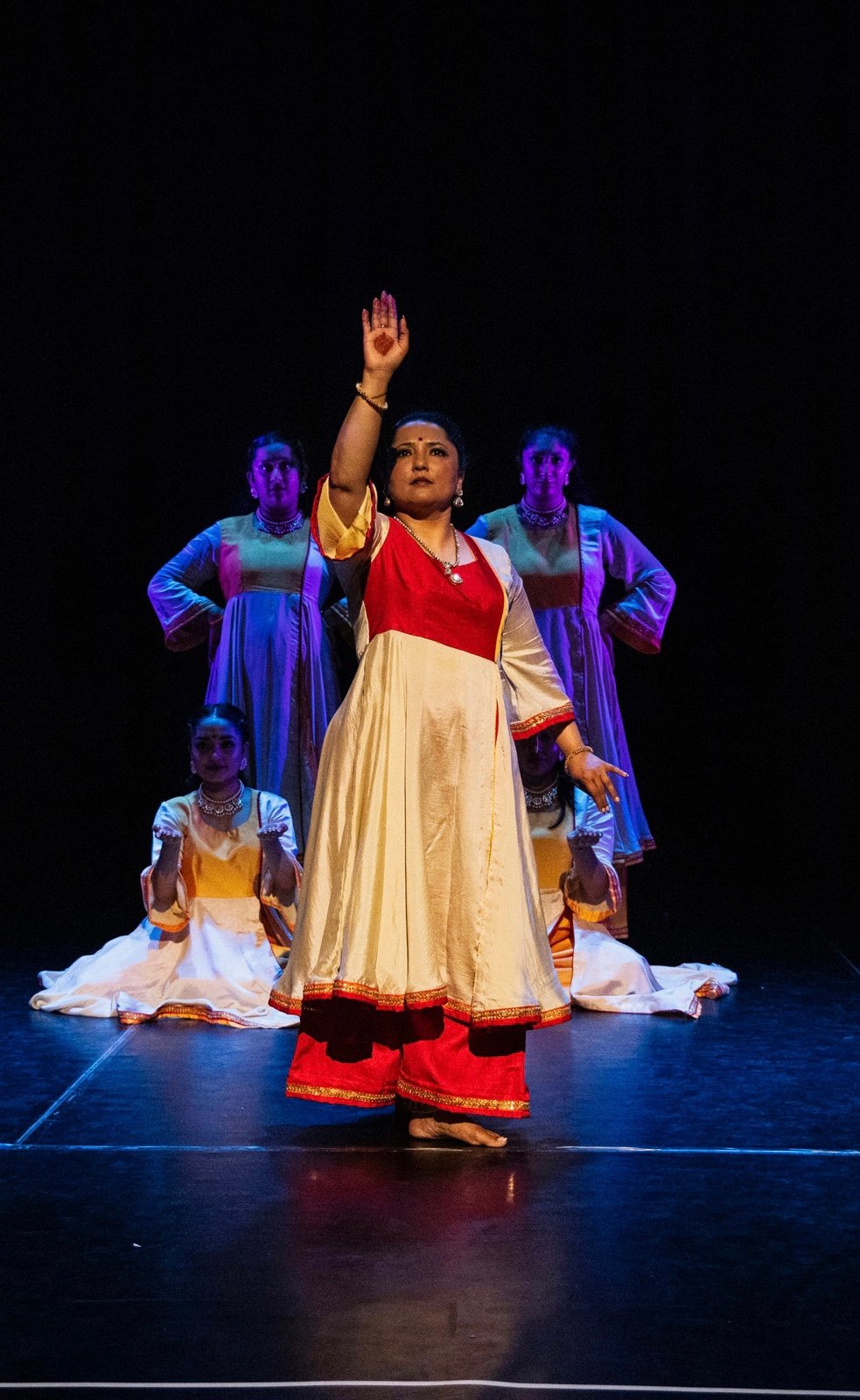
Image: Nirantar 2023; Credit: Vipul Sangoi
“I was lucky to be trained in two gharanas.”
Ashwini’s journey has been shaped by training in two different gharanas (schools of dance) in kathak. Building her core foundation in kathak under her mother, she developed a deep understanding of the Banaras gharana. Under her mentorship, she was also exposed to learning under a variety of legendary dancers early on, including Sitara Devi and Pandit Gopi Krishna, which shaped her early appreciation of this art form.
After seeking a scholarship and with the support of her mother, she was also able to train under the eminent kathak dancer and choreographer, Guru Shama Bhate, who trained her in the Jaipur gharana. “She taught me how to listen and understand the music, how to focus and work with a true ‘nritya ka dhyaas’—an all-consuming passion for dance,” Ashwini recalls. “It felt like she opened her wings for me.” Through Guru Shama Bhate, Ashwini was also able to be exposed to learning from many legendary gurus. She was also able to learn a bit from odissi master Guru Kelucharan Mohapatra, whom she met through a workshop at Pune University. Training with him in that workshop introduced her to the concept of Nayika, teaching her how subtlety, delicacy, and emotional precision are paramount in abhinaya.
Later, she was also exposed to and understood a bit of the Lucknow gharana when she met Pandit Birju Mahraj through workshops and worked alongside him on Sanjay Leela Bhansali’s Devdas in 2002.“I got exposed to a different grace, intellect and musicality under him,” expressed Ashwini. This experience made her understand a bit more about how to move and express yourself in Ashwini. Fondly recalling a moment from those days, Ashwini said, “One day Maharaj ji asked me about how ‘ta ta dhik tat taiya’ felt to you, and to that I replied, ‘It feels like opening a bottle of Coca-Cola, spurting out with the same excitement and fizz.”
“I was lucky to be trained in two gharans and learn from such legendary artists, which helped me shape my now individual style of kathak that I can impart to my students,” expressed Ashwini.
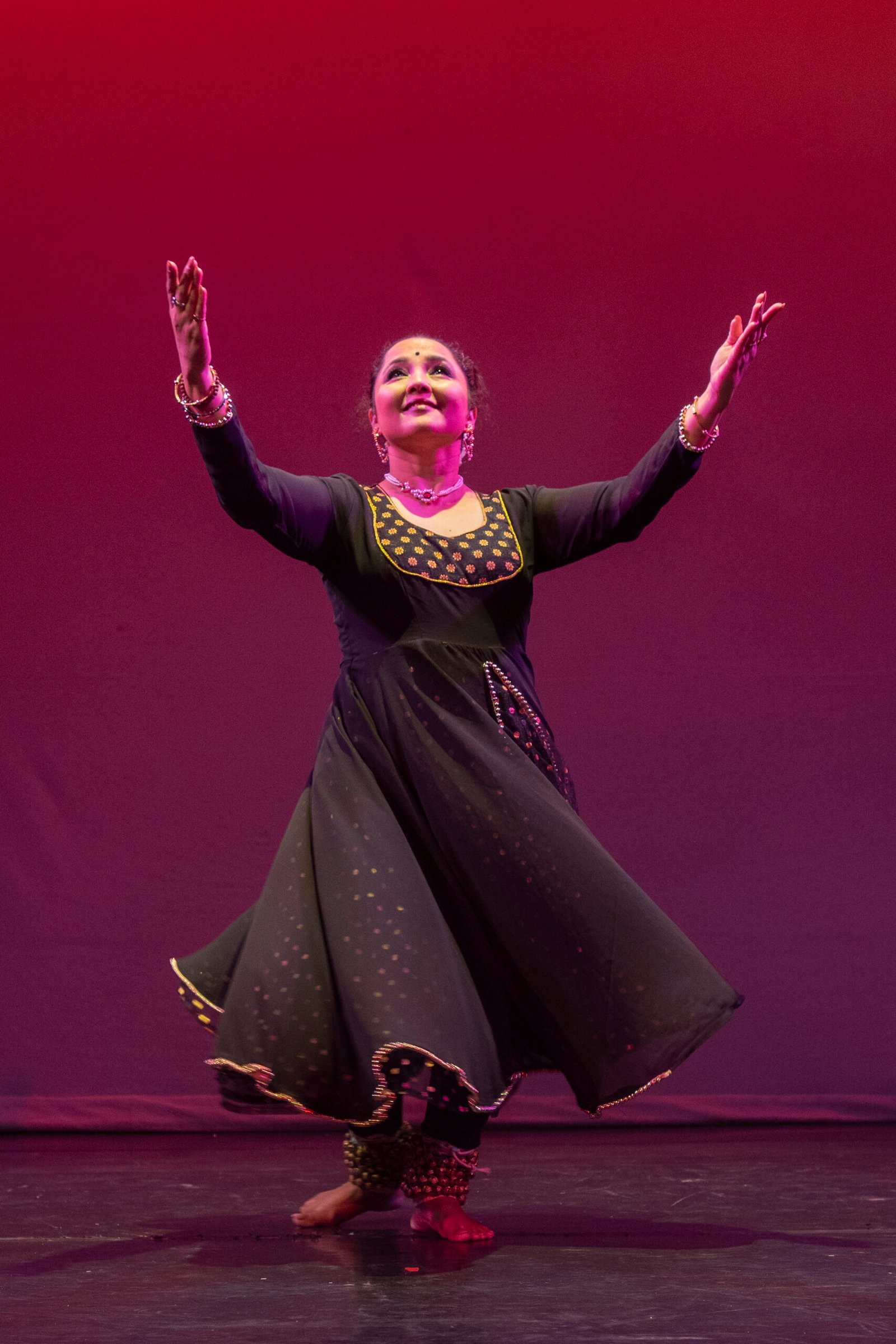
Image: Mahadev: Journey of Shiva 2020; Credit: Vipul Sangoi
“To make your art accessible, you need to think outside the box”
After moving to the UK, following her marriage, Ashwini carried the legacy forward and eventually established Kirti Kala Mandir UK CIC in 2023. Commenting on whether teaching or learning dance in the UK is different compared to how it is practised in India, Ashwini said, “South Asian performing arts are rapidly flourishing in the UK. It’s all about the values you impart to your students, not the country where you are learning the art.” Recalling her observations from learning in lectures under Guru Rohini Bhate during her Masters and from watching her mother teaching, Ashwini further adds, “You need to be able to create a language, whether you are teaching or performing the art form, that is accessible and understandable to everyone. To make it accessible, you also need to think outside the box and adapt it to the needs and age of the children.”
Ashwini puts this philosophy into practice in the UK through several approaches that encourage her students to take an active role in their learning. By setting aside the last fifteen minutes of every class for questions, she creates an open environment for discussion and participation. She also emphasises nurturing young leaders. Students at Level 4 or aged 13 and above are encouraged to take classes alongside her, giving them opportunities to communicate fundamental concepts to peers of their own age while developing their confidence, leadership skills and understanding of teaching kathak. Beyond the classroom, Ashwini also encourages her students to attend live performances by diverse artists, including Urja Thakore, Sujata Banerjee, Jaivant Patel, and Akram Khan, to broaden their artistic perspectives.
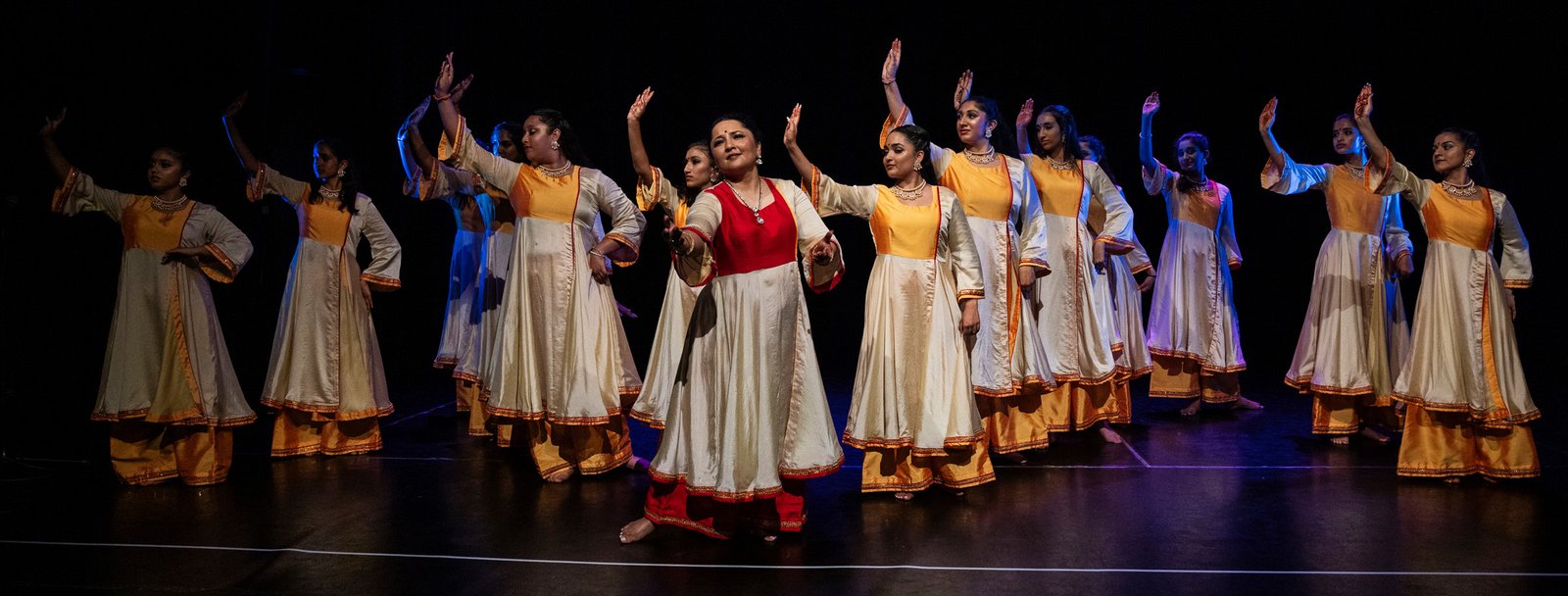
Image: Nirantar 2023; Credit: Vipul Sangoi
She also explores creative ways of demonstrating kathak’s versatility, using Bollywood tracks to introduce rhythm and beats, encouraging students to learn folk forms such as Lavani to expand their physical expression, and even choreographing tihaais and koravais to the iconic Nokia ringtone as a Nagma. Through these experiments, she demonstrates that kathak’s rhythmic framework need not be confined to traditional musical compositions.
The showcase will culminate in a performance set to the traditional Marathi salutation Ghalin Lotangan. Traditionally sung at the conclusion of the Ganpati Aarti, Ashwini presents it here as a gesture of deep reverence, gratitude and worship to her mother, who first introduced her to kathak, pays homage to Lord Krishna (the central deity of dance in Kathak) and all gods, and honours her extended family of students at Kirti Kala Mandir who carry this 50-year Virasat into the future.