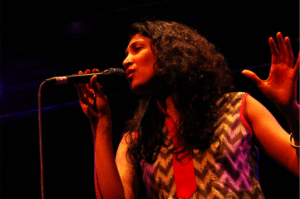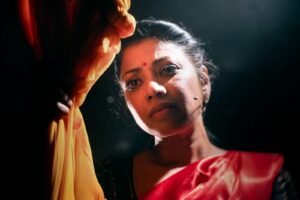
By Sanjeevni Iyer
What if creativity could change how you live and interpret your pain? What if it could collaborate with healthcare?
At Take a Pause: Creative Approaches to Living with Persistent Pain, an exhibition and opening event held in London this year, these questions unfolded through poetry, music, storytelling and movement. The exhibition grew out of Balbir Singh Dance Company’s (BSDC) ongoing collaboration with the INPUT pain management programme at Guy’s and St Thomas’ NHS Foundation Trust in London. It brings creative and therapeutic activities to support pain rehabilitation and improve quality of life for people living with persistent pain.
The work builds on Unmasking Pain, a wider collaborative project led by BSDC with researchers, pain specialists, healthcare and creative partners, including Professor Paul Chazot of Durham University and Dr Frances Cole, a retired GP with a speciality in pain management. By bringing together artists and people living with persistent pain, the project explored how creative practice, including dance, drawing, puppetry, music and clay work, could offer new ways for the participants to communicate experiences that are difficult to put into words.
How does art meet healthcare?
The International Association for the Study of Pain defines pain as “an unpleasant sensory and emotional experience associated with, or resembling that associated with, actual or potential tissue damage” (Raja SN et al., 2020). Yet the experience of pain extends beyond this definition, affecting how people sleep, move and interact with their bodies. As Dr Cole mentioned, “Pain is not the predominant issue for the patients. It is the lack of sleep and movement for them.”
Building on the learnings from Unmasking Pain, BSDC’s ongoing collaboration with Guy’s and St Thomas’ Hospital has continued to explore how creative activities can help people communicate and approach these experiences differently, using movement, colour, shapes, and storytelling.
However, integrating artists into a healthcare environment requires more than simply delivering a dance or clay-making workshop. It involves “building trust with artists, clinicians and participants, and working alongside occupational therapists, nurses, psychiatrists, GPs and scientists, understanding their backgrounds and their clinical approaches and then considering how creativity can fit within them,” explained Singh.
It also requires adaptability. Singh emphasised the importance of supporting the artists in delivering their workshops while helping them redefine their approaches to the needs of different groups. “It’s about understanding different vocabularies and measures of success, and learning from everyone involved. One material for one group may not work with another, so it requires adapting to human experience, sharing ownership, correcting course when needed, and taking the time to observe and listen to participants,” he expressed.
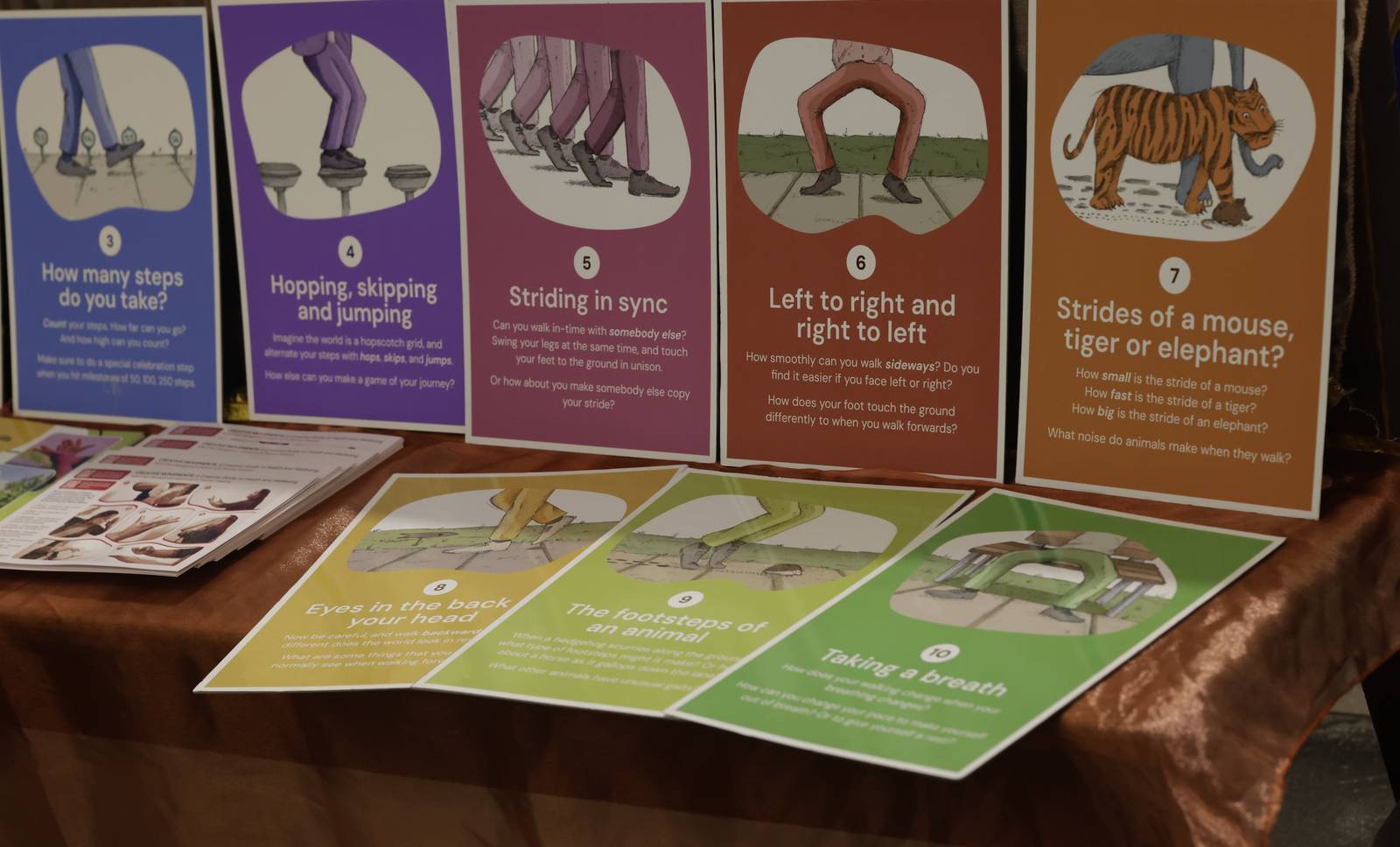
Image Credit:Vipul Sangoi
Dr Cole also explained how the team wanted to explore ways to reduce patients’ reliance on pain medication. This led them to investigate how creative approaches, including movement and artistic expression, could offer additional ways in which people can understand and manage their pain. Dr Cole and Singh reflected on the positive impact of the project, drawing on their observations and feedback from patients, which highlighted improvements in their sleep, diet and energy levels, reduced reliance on pain medications, and a new way to manage and interpret their pain. Reflecting on a clay-making session in 2024, one participant said: “I enjoyed looking at the outside through artistic eyes.”
Artists and their experiences:
The work also brought together artists including Mansi (Dabral) Uniyal and Kali Chandrasegaram, both of whom brought personal experiences of pain, creating opportunities for participants to connect with the activities through experiences that may resonate with their own.
For kathak dancer Mansi (Dabral) Uniyal, who lives with osteoarthritis in her left talonavicular joint, the project struck a personal chord. When doctors told her that she might need surgery, with the possibility of it affecting her mobility, the news deeply affected her. So she began looking for alternative ways to navigate her condition and continue dancing. “When Veerji (Singh) introduced me to the concept of this project, it completely resonated with me,” she explained. “I wanted to see how creative art forms can change a person’s relationship with pain.”
Since collaborating on this project, Uniyal now reflects more deeply on her relationship with her body, dance and pain. It opened up possibilities for her to creatively explore how she can continue dancing by either modifying her steps, using new movements, or changing the way she looked at her pain. Uniyal also explained how every day brings different challenges for people experiencing persistent pain. So rather than focusing on the long term, she adapted her practice to what her body could manage each day, and continues to find ways to move while pursuing her art.
Her experience also offered her a new way to approach patient care. Noting how pain cannot always be adequately represented on a numerical scale or a standard set of movements, Uniyal explained, “Being more empathetic and using a creative approach to navigate a patient’s problems helps them to not only articulate their pain, but also consistently work on it.” She shared how using even simple prompts such as “create a story about your feelings, describe your settings using gestures or let’s go through some movements for how you feel about the pain” can help people explore their pain differently and find new ways to communicate it, despite physical limitations.
For Kali Chandrasegaram, an Indian classical dancer, who has been involved in the project since its early stages and has ongoing chronic pain, a shift in perspective began with a suggestion from Singh: to look at pain externally. Rather than seeing it only as something happening within his body, Chandrasegaram began exploring how he could observe and engage with the experience differently through dance. With this began his journey with fascia. Using fascia and actively working on ways to understand and manage his pain, he developed a five-step approach for himself: acknowledge the pain; accept that the body is asking for help; pay attention to where the pain is situated; articulate it and act on it; and allow time for healing. “This helped me make sense of my pain and navigate my relationship and responses to it, while continuing to pursue my art,” expressed Kali.
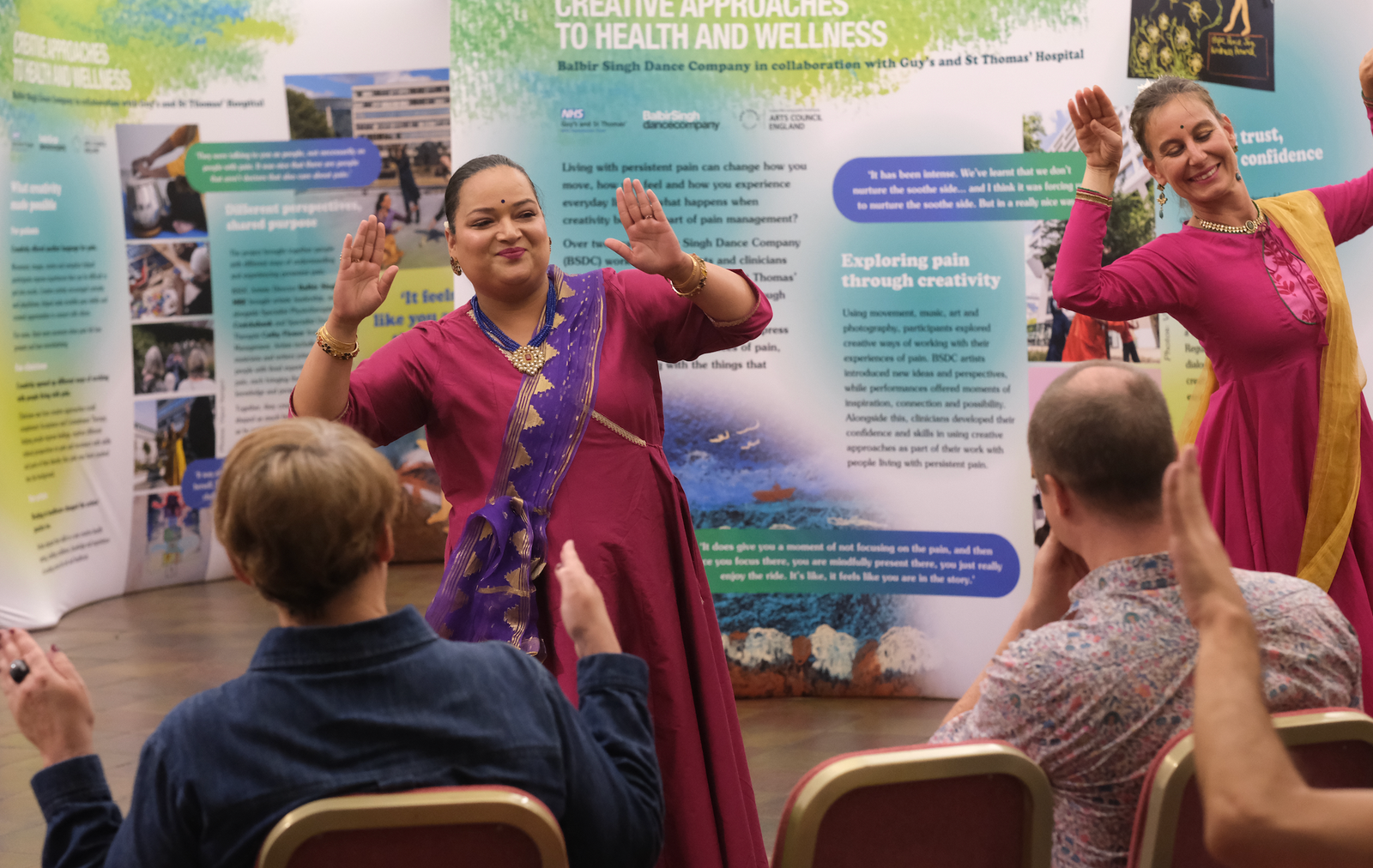
At TAKE A PAUSE, these personal experiences were shared through performances and spoken poetry, bringing artistic practice into conversation with healthcare perspectives. The event commenced with a poem by Dr Adam Strickson, followed by Indian classical dance performances by Chandrasegaram, Uniyal, Manuela Benini and Sanjeevni Iyer. Chandrasegaram’s solo explored his experience with chronic pain and how movement helped him interpret it differently. His performance offered the audience a glimpse into an experience that can be difficult to communicate through words alone.
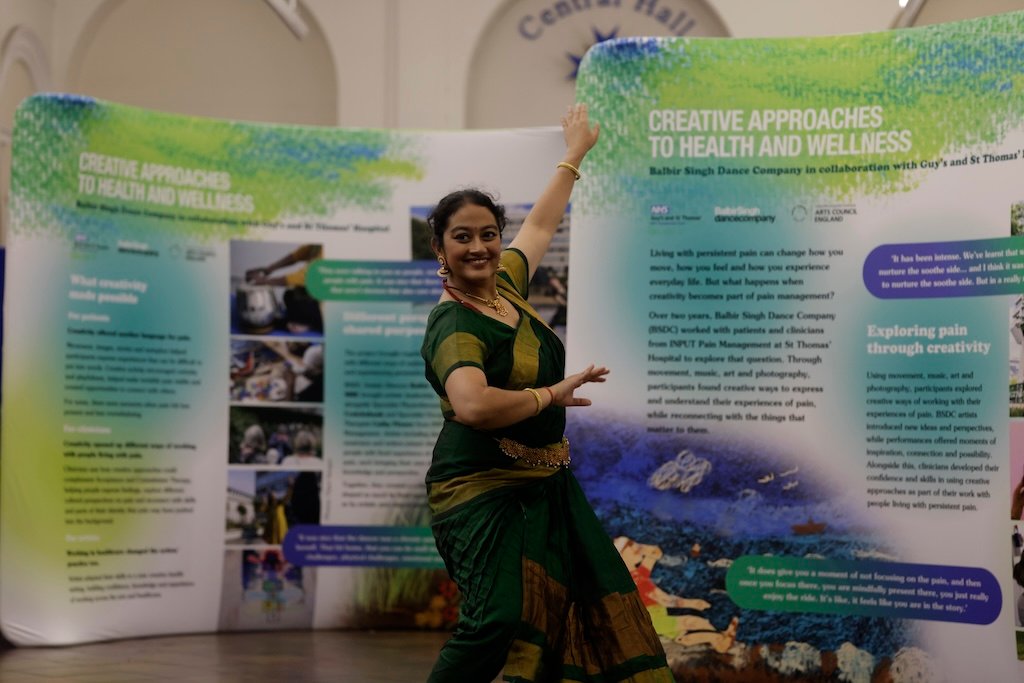
Image Credit: Vipul Sangoi, Dancer: Sanjeevni Iyer
Uniyal and Benini closed with an interactive activity inviting the audience to express their favourite animals through dance. Moving beyond the traditional performer-audience relationship, the exercise showed how creative expression can be accessible without formal dance training. It invited audience members to participate rather than simply observe, bringing the idea of exploring experience through movement into the room itself.
The event reflected BSDC’s wider ambition to take Indian classical dance beyond the stage and into spaces where it can be experienced differently. As Singh explained, “One of my key takeaways from this project was its impact on the artists themselves, helping them recognise the power of their art forms to bring people together, navigate pain, think creatively and transform their lives.”
Through its work with healthcare partners, Singh also mentioned how the company has explored activities around movement, sleep, food and cultural traditions, recognising that persistent pain can affect many aspects of daily life. These activities give artists the room to also develop their own ideas and adapt their work in response to participants. By documenting experiences and bringing different perspectives together, BSDC hopes to contribute to wider conversations about how creative approaches can complement medical support and be explored in other healthcare settings.
References:
- Raja SN, Carr DB; Cohen M, Finnerup NB; Flor H, Gibson S, et al. The revised International Association for the Study of Pain definition of pain: concepts, challenges, and compromises. Pain. 2020;161(9):1976–82. Epub 2020/07/23. doi: 10.1097/j.pain.0000000000001939 [DOI] [PMC free article] [PubMed] [Google Scholar]