By: Meghana B for Line & Verse
As a student of bharatanatyam and an appreciator of the classical arts, I am drawn to the aesthetics of its repertoire that has endured across generations. At the same time, I have closely followed artists pushing against those boundaries. Candidly, many contemporary experiments leave me unconvinced. In the pursuit of novelty, they often lose the depth and rigor that make classical forms beautiful, introspective, and timeless.
Shilpanatanam felt different to me. Its movement language was immediately striking, yet it never seemed untethered from its source. Even as a viewer, I could sense that its innovations emerged from a lifetime of study rather than a desire to simply appear new.
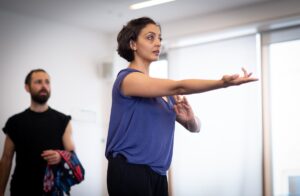
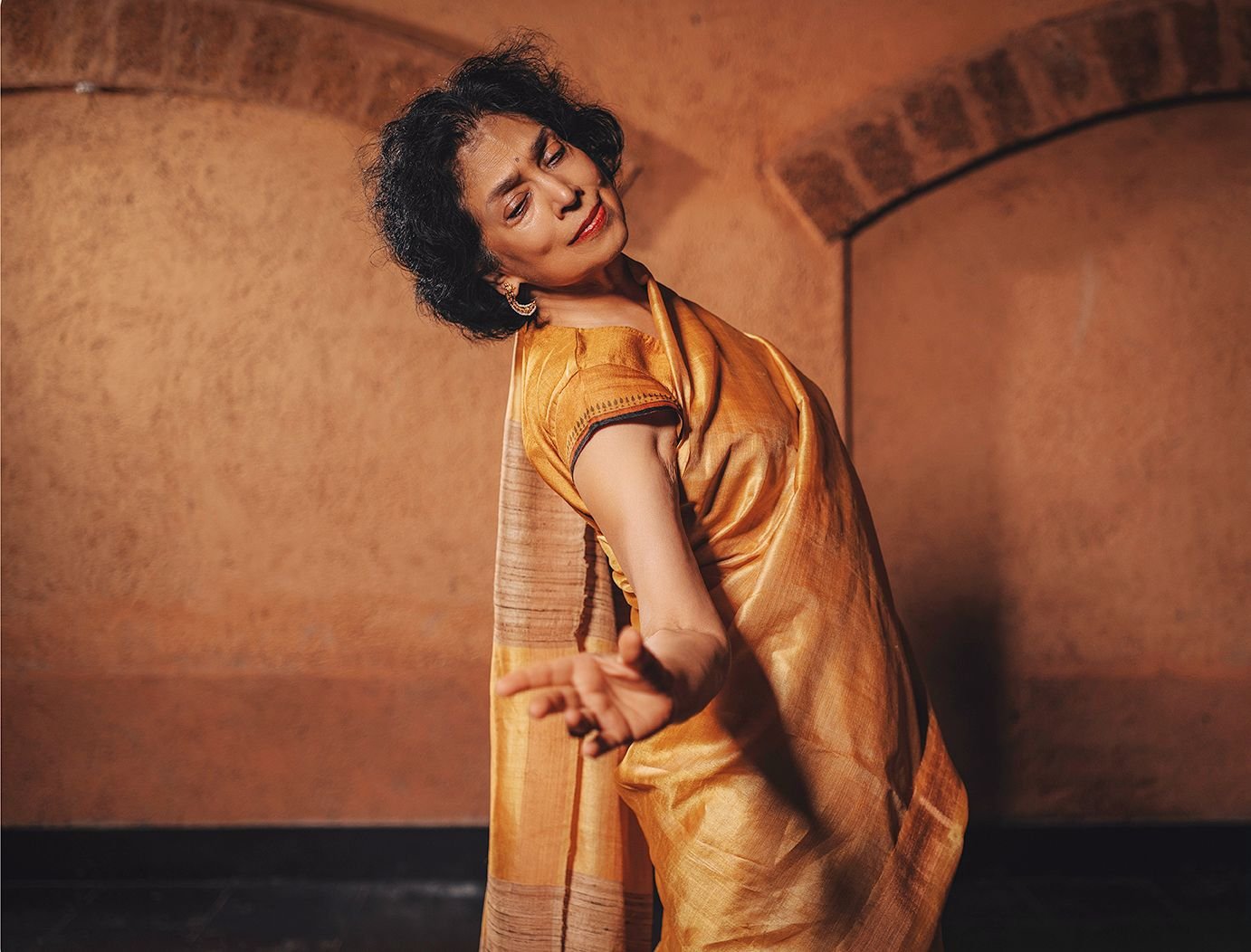
Dr. Maya Kulkarni, a dancer, scholar, and longstanding pillar of New York City’s South Asian arts community, developed shilpanatanam to expand the kinds of stories classical dance can tell while making them more legible to audiences. Yet its foundations remain rooted in the natyashastra, the theoretical framework that underpins South Asia’s classical performance traditions.
Shilpanatanam did not begin as an attempt to create something new. It took shape slowly, as Maya Kulkarni’s relationship to bharatanatyam began to shift. After decades of training and performance, she found herself asking not how to expand the form, but what it had quietly narrowed.
Kulkarni’s career has never been confined to the stage. Trained as a political scientist, she holds a PhD and spent years teaching at institutions such as NYU and William Paterson University before turning her full attention back to dance. That background in research and critical inquiry continues to shape how she approaches the form.
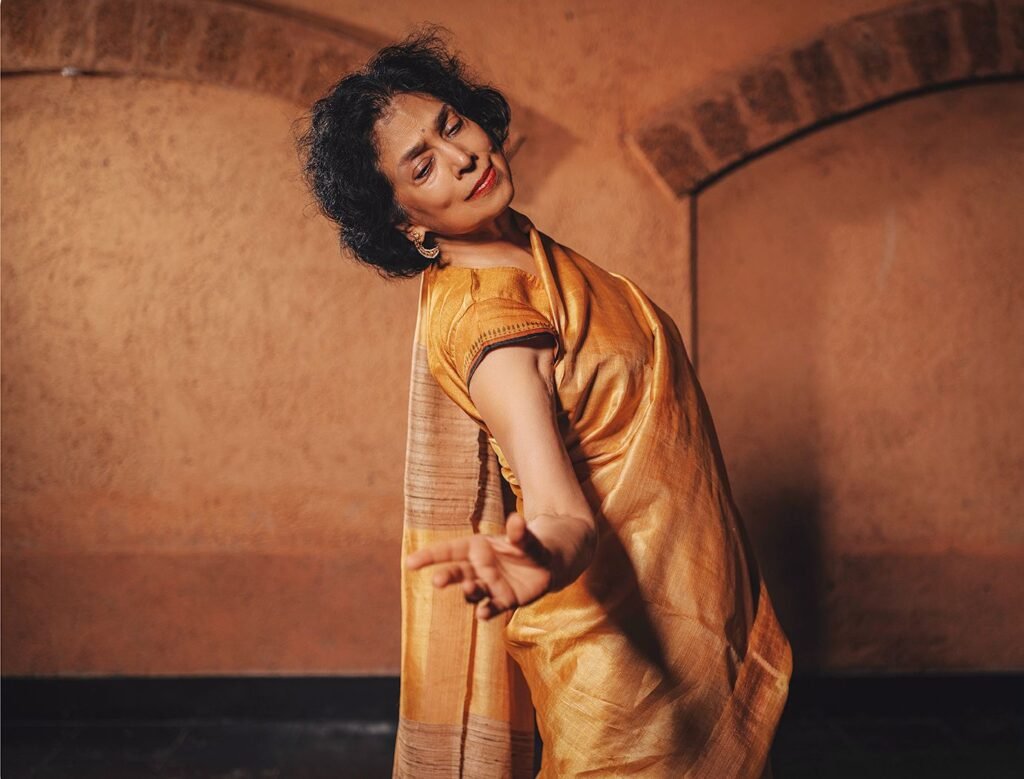
Her training began in Mumbai under Guru Parvati Kumar, in an environment where rigor extended beyond movement into the study of scripture. The natyashastra was not a distant text, but something to engage with directly. At home, her father, a Sanskrit scholar, reinforced that foundation. By the time she was performing in Mumbai’s festival circuits as one of their youngest stage artists, she was already engaging seriously with questions about bharatanatyam’s purpose and possibilities.
In Chennai, her training deepened under Gurus Jayalakshmi, D. Pillai, and later Kalanidhi Narayanan. Long days of practice with live musicians made dance feel responsive and organic rather than rigid. Across these spaces, her training drew equally from text, music, language, and culture. She became especially drawn to the meeting point of abhinaya, facial expression in dance, and manodharma, a singing practice where the artist creatively improvises on the spot.
Over time, the ongoing practice and performance format of bharatanatyam began to feel narrow to her. Kulkarni points to the margam, where familiar varnams and sancharis often circle the same figures and emotional arcs – the lovelorn nayika, the devotee in surrender. The issue for her was not the themes themselves but the idea that auditoriums were becoming echo chambers. For instance, bhakti, or devotion, has become the primary communicated emotion of most performances. Kulkarni argues that this begins to limit what can be explored. “If you have already reached surrender [in the form of devotion],” she asks, “what is left to be shown?”
She returned to the natyashastra, which conceives dance as a reflection of the full range of human experience rather than a vehicle for a single emotional endpoint. “A dancer’s dharma,” she says, “is to show the entire gamut.”
That shift changed how she approached her work. If bharatanatyam had come to emphasize nritta, or the physicality of the art form, she began moving back toward natya: story, character, and theater. Instead of fitting narratives into an existing vocabulary, she began building movement from what the narrative demanded.
Shilpanatanam grew out of this process. The term shilpa, in the natyashastra, refers to a broad field of artistic practice. Kulkarni draws from literature, philosophy, and visual art, allowing each work to shape its own movement language. A painting of Medea at the Metropolitan Museum became the starting point for one work. Greek mythology, Plato, and Kalidasa are not stories typically associated with bharatanatyam, but Kulkarni saw no reason they could not be.
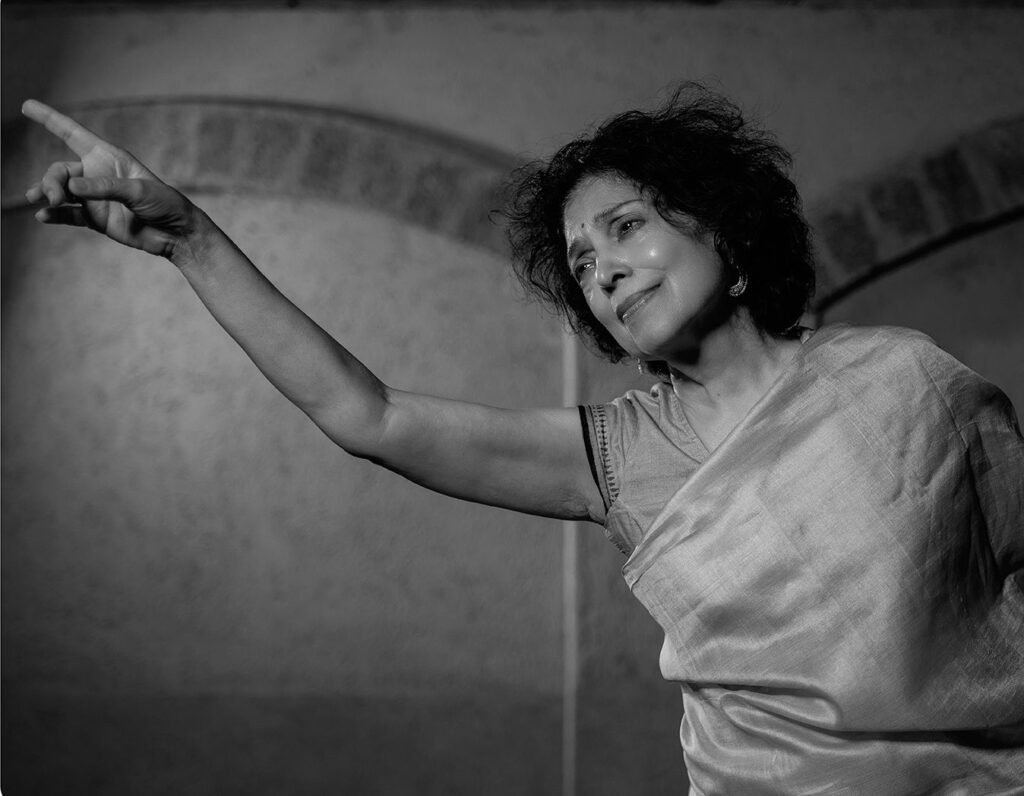
These choices reshape how she wanted narratives to operate on stage. In bharatanatyam, gesture often literally describes a thought, but Kulkarni shifts toward embodiment. The dancer does not show a lotus blossoming with their hands, but becomes it through a dramatic movement of their limbs. In her Durga work, she inhabits the lion as much as the goddess, making the scene legible yet striking even to those unfamiliar with the story.
That clarity responds to a broader problem. The gap between classical dance and its audiences has widened. Without prior training, viewers often focus on speed and footwork or disengage from the narrative. Mudras and facial expression can become barriers rather than entry points, both in India and in the diaspora.
Shilpanatanam addresses by focusing on translating rather than simplification. By grounding movement in dramaturgy and visual logic, it allows audiences to follow the narrative without needing to decode it. Notably, Kulkarni does not step away from bharatanatyam. Its influence remains visible in her lines, posture, and musical sensibility. Her training in Carnatic and Hindustani music shapes her compositions, where she explores how a single text can shift meaning through different ragas.
For Kulkarni, innovation is not a rejection of tradition but a consequence of taking it seriously. Shilpanatanam emerged from decades of study, performance, and reflection, not from a desire to appear contemporary. If the classical arts are to evolve, she argues, they must do so from a place of depth rather than novelty. “What you have in your hand is so precious,” she says. “You must use it carefully.”