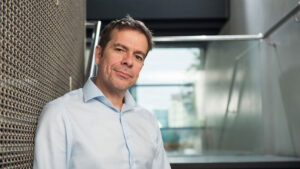
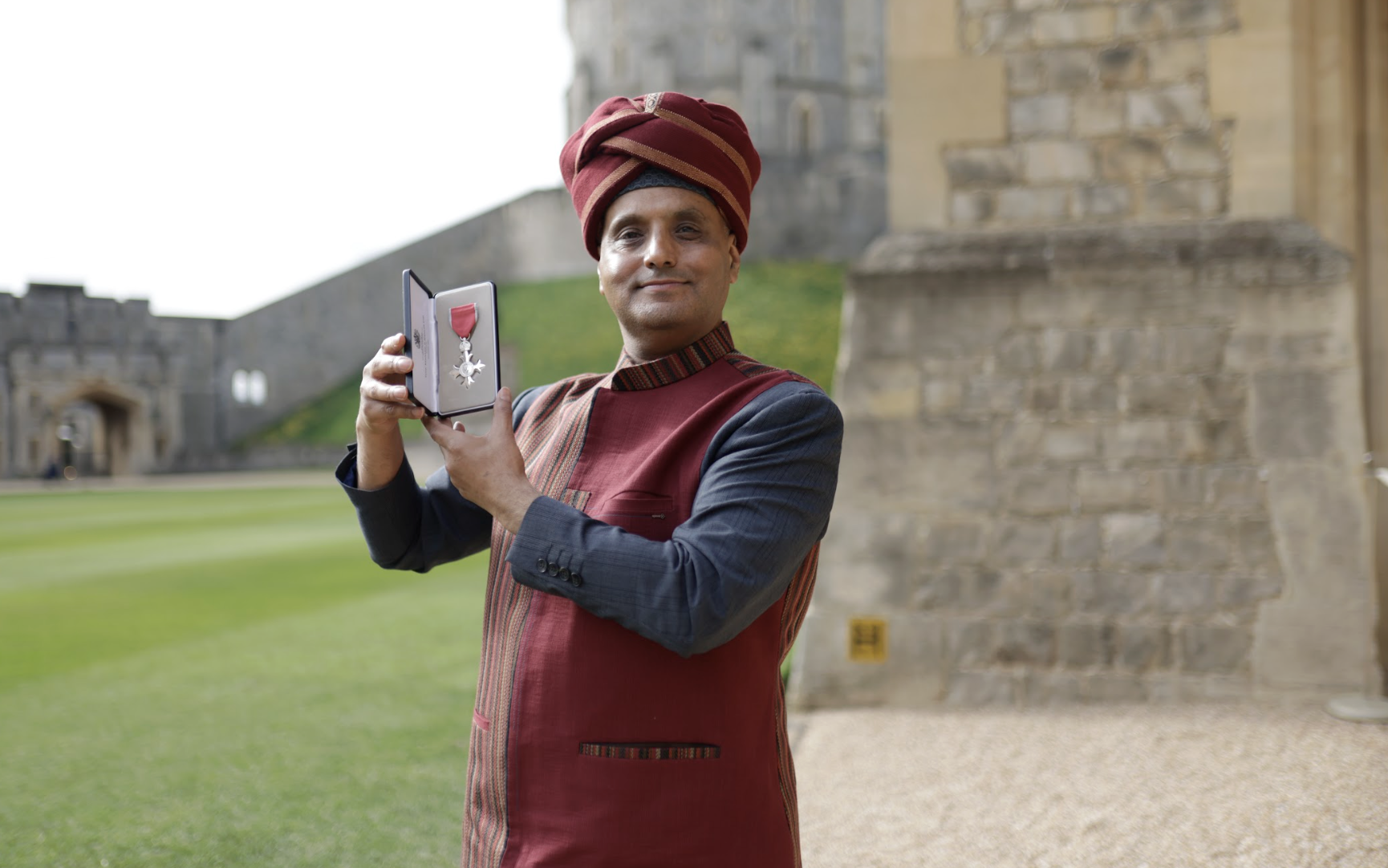
Sanjeevini Dutta chats to Balbir Singh on the occasion of his receiving his MBE award at Windsor Castle on 12 March 2026.
SD: Balbir when I saw pictures of you at Windsor Castle in your outfit complete with turban, my first thought was, ‘son of Punjab’. How much of your heritage is expressed through your dance?
BS: It’s always present. I was born in India and raised in Bradford, so I’ve grown up between cultures. Kathak connects me to heritage, rhythm and storytelling, while my life and practice have unfolded here in the UK. The work naturally brings those worlds together rather than choosing one over the other.
SD: Are you bi-lingual, how good is your Punjabi?
I say I have two mother tongues – Punjabi and English, although some would say I speak too fast to comprehend in either language. I jokingly say you have to listen quicker! At home with my mother, I speak Punjabi and out on the streets English.
SD: At what age did you start learning dance and when did you realise that you were going to be a dance professional?
BS: My path into dance wasn’t straightforward. I actually started out studying law, but I realised quite quickly that it wasn’t where I felt most alive. That led me to train at the Northern School of Contemporary Dance in Leeds. Alongside that, I began training in Kathak under the guidance of Guru Pratap Pawar, which gave me a strong grounding in classical form and discipline. Between those two experiences, something shifted. Dance became something I wanted to commit to fully, and from there it grew into a lifelong practice.
SD: When you think of a new performance project are you led by an idea, a story or is it a visual thing?
BS: It often begins with a question rather than a fixed idea. I’m interested in what dance can open up, whether that’s across cultures, within communities, or in response to a particular place. From there it might become a story, a visual language, or a collaborative process, it tends to evolve as it goes.
Ideas are always there, almost queuing up. I sometimes feel like a vessel for them, as if a bird lands on my shoulder and whispers something into my ear. My role is to catch that idea, sit with it, and begin to understand it on an abstract level. Then, working with the dancers, we flesh it out and translate it into something more tangible. They are essential to that process, they become the bridge between the initial spark and the final work.
SD: Of your dance works, tell us about one of two that you are particularly proud of?
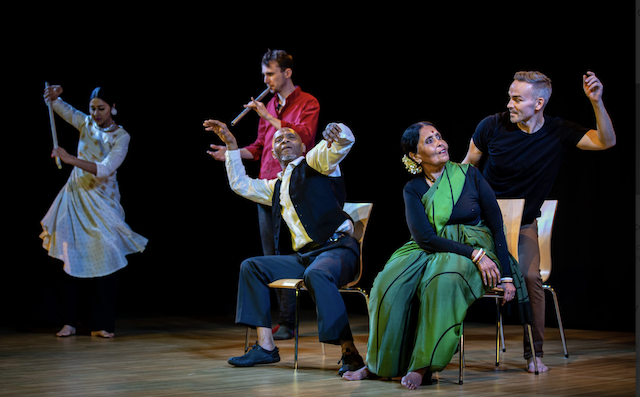
BS: There are a few that feel important in different ways. Early works like Reflections of an Indian Dancer and Love and Spice helped shape the company’s voice, bringing Kathak and contemporary practice into dialogue. More recently, projects like Unmasking Pain stand out because they move beyond performance and bring dance into conversation with health, research and lived experience.
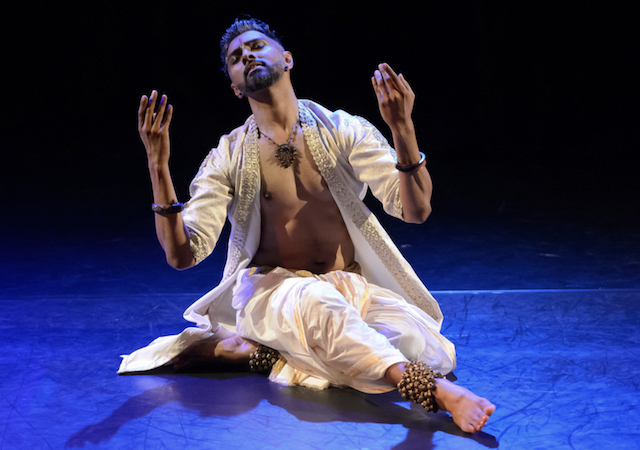
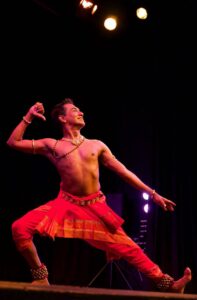
Sooraj Subramaniam in Reflections of an Indian Dancer
SD: In you project of Unmasking Pain, do participants suffering from chronic pain, simply forget their pain while participating or have you devised practical exercises to ease pain? How realistic is it to measure ‘pain’
It’s not about people forgetting pain, but about creating a space where they can explore it differently. Through movement and creative practice, people can reflect, connect and sometimes shift how they relate to their pain. Measuring pain is complex, but we do see changes in confidence, communication and a sense of shared understanding.
Through this work, we’ve learned a great deal about the bio-psycho-social nature of pain. It begins with building trust and creating a shared space through creative interaction. Sometimes it’s about being present and gently turning down the volume on pain by focusing elsewhere. At other times, it’s about building confidence or finding a language to better understand and express the relationship between the body and the self.
We are not trying to cure pain, but we have seen that the work can shift people’s relationship to it, and that in itself can be very powerful.
SD: What is your one unrealised dream? (If you feel that you can share with us).
BS: To take this way of working further, where dance moves freely between art, health, research and community life, and becomes part of how people understand themselves and each other. I think we are only just beginning to see what is possible there.
SD: Can I say personally how much I have enjoyed the breadth of your ideas from dancing with synchronised swimmers in Synchronised, 2012 to the love and food piece with actual cooking happening on the stage Love & Spice, 2023. You certainly push the boundaries.