
Why an Indian classical dance concert is like forest bathing
By Durga Tilak
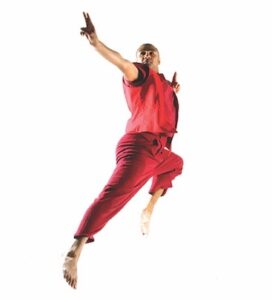
Dancer Featured: Chamu Kuppuswamy
Image credit: Simon Richardson
Every now and then, I get asked a question:
“I am fascinated by Indian classical dance. There is such beauty to it. The elaborate codified way of telling stories, the delicacy of the expression, it’s amazing. But…”
But what?
“But I don’t know what I’m watching. I don’t know what I’m supposed to keep an eye out for. And then, eventually, I, I…
Yes?
“I stop trying to follow; to understand.”
I have had many such conversations and felt the need to help out- to be a bridge between the dancer and the viewer. There are already so many resources that speak exhaustively on how lyric and music are visualised in the classical traditions. This piece is more a primer that hopes to embolden a hesitant rasika to approach the talks/lecture demonstrations that I have linked above.
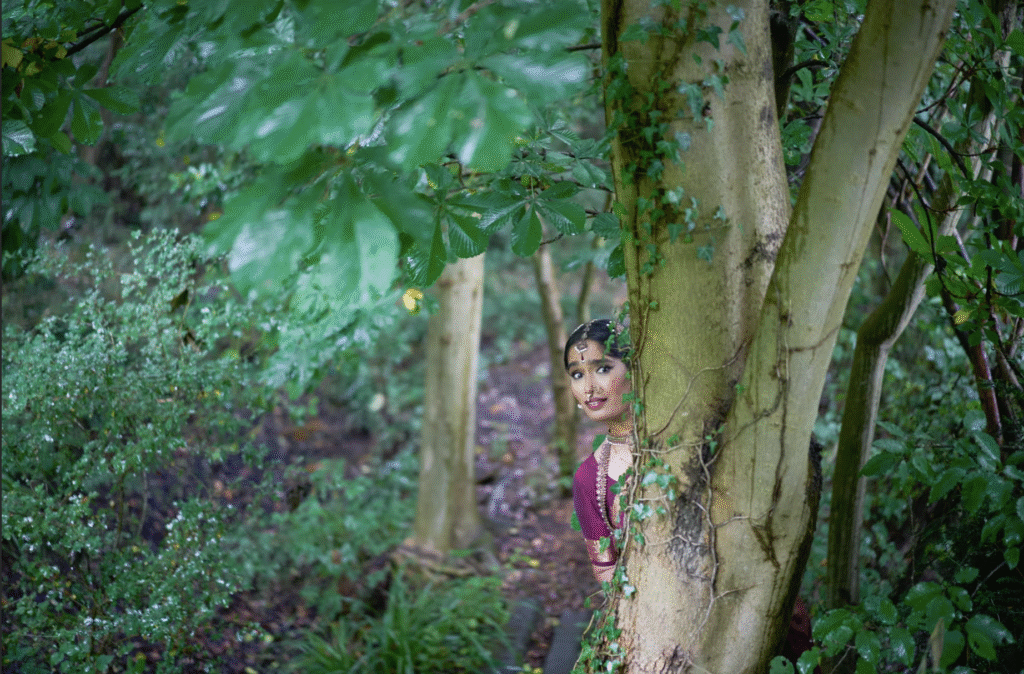
I concede that this bridge-building is difficult. How do audiences that have not studied these traditions find an in-road to Indian dance? As I was thinking of this piece, I arrived at an analogy that I think aligns with how I experience Indian classical dance: watching a classical dance recital is akin to a forest bathing experience. There is a lush forest of meaning and rasa waiting on the other side of the comprehension. As someone who got a taste of the forest and loves to get lost in it each chance she gets, here are some ideas to help you navigate your first forest bathing experience:
Exploration: Explore fearlessly. The first few times one forest bathes, the one dominant emotion one returns with is tranquillity. The green sea has washed away the cobwebs of the mind. The deeper you go into the forest, the quieter it gets. Similarly, every opportunity to witness a classical recital is a chance to acquaint oneself with the peace that these traditions afford. One might not be able to expertly name all the species of plants one encounters. But each new outing will help one tune into the environment of the forest. By the time you have witnessed your ninth/tenth full-fledged recital, you will begin getting a lay of the land. You will know how a path wanders into dense shrubbery. You will sense when a clearing might appear. Just like that, you will develop an intuition for how pieces unfold, how they ebb and flow. It will still be difficult to attach concrete meaning to any of it at that point, but in time, the recital will begin distinguishing itself into clear, discernible units.
Immersion: Once one has acclimatised to the quiet yet alive humdrum of the forest, the initial hesitation of being alone in a sea of emerald fades. It is now time to exhale, observe, notice, and absorb. How many shapes can leaves take? Does the texture of the bark feel the same on two tree trunks? How does a creeper differ from a runner? In time, you will ease into a recital similarly.
The shape of an Alaripu is different as compared to a Jathiswaram, although they belong to the same species (that is, they are both rooted in Nritta, or pure movement-centric dance). However, they are textured differently. Where the Alaripu feels stark in its simplicity, the Jathiswaram is more ornate, possibly because it borrows its richness from the music to which it is mapped. Where a Padam humanises a dialogue between divinity and mortals, a Javali is unabashed in its celebration of the ordinary moments of human life. They are both delicate lianas; one meanders on the ground, the other inches vertically towards the sky.
The more intently you absorb the beauty of these plants (no matter how superficial it feels initially), the more you are training your mind to be receptive to these details. The best part is, you do not have to be an expert at communicating these differences to someone immediately (or at all). The focus of this expose-and-absorb exercise is to prime yourself for a richer viewing experience for the next time you head into one.
There will come a time when you will be able to tell the difference between say, two leaves. That’s when you know that it is time to spend some time examining each of them closely.
Engagement: Reading about the structure of one kind of a leaf helps one to know of each of its parts by name. Knowing what one is looking at deepens the appreciation of the sight – knowing that what you hold is actually the petiole of the leaf (and not the stem), or that the venules sprout off the vein offers one an inroad into appreciating the details of the leaf’s anatomy. Similarly, your self-guided initiation into watching classical dance will, in time, issue you an invitation to engage intensely with just one piece of each kind. Watch that same piece multiple times. Study that one leaf extensively. Ask questions about the structure, the form, the music, just about anything that leaves you curious about the why of the composition. Know, for example, when a Varnam transitions from the first half to the second, what signals this changeover, how the rhythmic segments punctuate it and why – building a sense of these deepens the viewing experience. Know the history behind why there is (most often than not) a lyrical segment in the Thillana. Discovering these feel like being let into the secrets of the choreography’s anatomy.
These three steps can be elaborated upon at varying intensities (ask and bully your classical dancer friends into helping you navigate denser forests better!). Each step of the way, the awareness and sensitivity you win only amplifies your next classical dance experience. There comes a point when these small yet mindfully undertaken measures coalesce into a crescendo of clear-eyed comprehension and seamless understanding. At that point, it feels a bit like being party to a dialogue that has the dancer at one end and you at the other. The stories they tell, the pictures they paint seem to be directed solely at you. And there isn’t much that tops an intentional, involved, and intimate conversation, is there?
Write to us about your first viewing experience of an Indian classical dance concert!