Varshini Krishnaswamy
Hoboken Dance Academy, New Jersey
4 January 2026
Reviewed by: Swetha Krishnamurthi
Photo Credits : We know pictures by Vinotha
Margazhi mornings carry a different kind of magic, a lull before dawn, a hint of cold in the air, and devotional music from the theatre speakers that seems to float gently around you. Against that sacred backdrop, a self-produced Bharatanatyam performance led by dancer and educator Varshini Krishnaswamy unfolded, and I had the joy of serving as the compère for the morning.
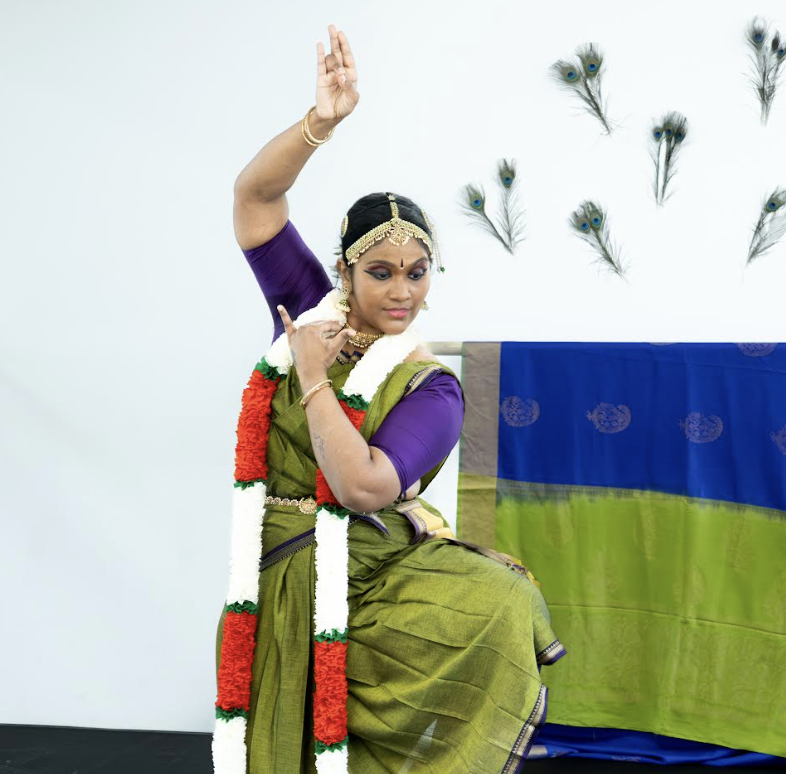
The program opened with excerpts from Andal’s Thiruppavai Pasurams, rendered as Ragamalika and Talamalika pieces. These verses are very close to Varshini’s heart because they’re among the very few Pasurams her Amma used to sing to her as a child. With every verse, a fresh emotion bloomed, from waking Krishna at dawn, to praying for rain and prosperity, to adoring the divine child, before culminating in full surrender at His lotus feet.
From there, the performance deepened into Chalamela Varnam in Natakuranji and Adi talam, a Bharatanatyam classic that blends pure rhythmic dance with expressive storytelling. The morning concluded with Eho Vitthale, an Abhang in Ragam Bhairavi, transporting us into Maharashtra’s devotional landscape and the story of Vithoba: The Lord who waits patiently for his devotee’s love.
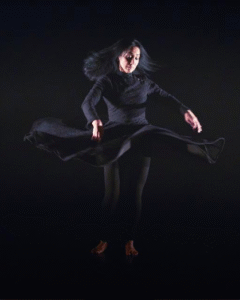
What struck me the most was the seamless blending of devotion and technique in Varshini’s dancing. Through the Pasurams Varshini invoked divinity. The segment demanded stillness and emotional restraint, and she met it with eyes that held the weight of centuries of recitation. In Chalamela, her lines lengthened and sharpened as stamina and narrative expressions began to bloom. Crisp footwork, layered abhinaya, and the emotional spectrum of longing and surrender all appeared without feeling forced. The Abhang brought a lighter touch of folk wrapped in classical structure, reminding us that devotion is not confined to temple halls; it vibrates in villages, and everyday hands that offer love.
Hosting this show felt like standing at a doorway holding space between the artist and the audience, offering context while watching the room transform through rhythm, gesture, emotion, and meaning. It was a privilege to witness a dancer’s inner world from just a few steps away.
Long after the applause faded, what lingered was not a single sequence, but the thread connecting the entire morning: bhakti. Not the rigid, ritual-heavy kind, but the quiet devotion that shows up in practice, preparation, community, and presence. Margazhi has a way of turning art into worship and this morning, we watched that transformation unfold with honesty and heart. Looking ahead, future performances could benefit from even more deliberate pacing and curation, allowing the physical demands of the repertoire to support, rather than test, expressive continuity across the program.
Varshini’s performance felt sincere, grounded, and generous. A reminder of why classical art continues to matter. It connects us to history, tradition, culture, and to one another and sometimes it also brings us a little closer to ourselves too.