
By Shane Shambhu.
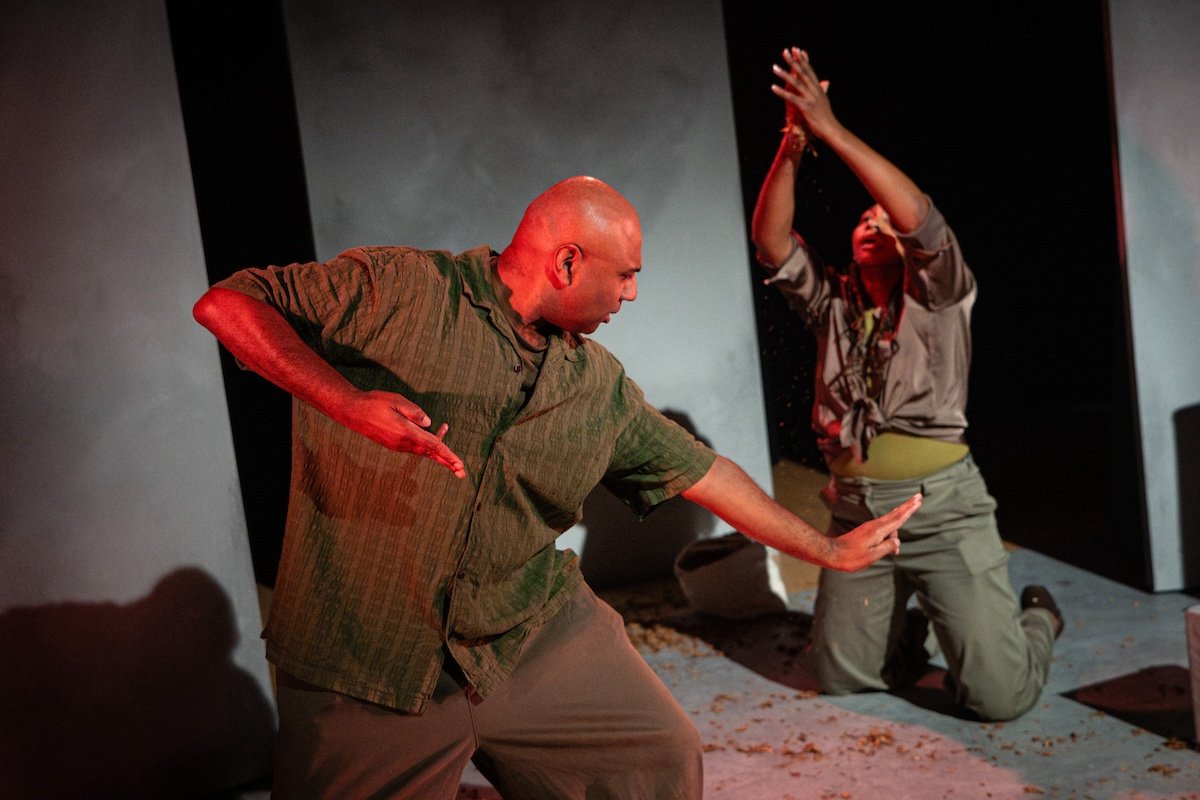
When we see ourselves (2026) Image Credit: Graeme Braidwood
Back in 2019, during an interview for Pulse’s The Banyan Tree Project, I was adamant that I didn’t want to describe bharatanatyam simply as “dance”. I called it “total theatre”. Bharatanatyam innately embraces music, rhythm, poetry, drama, storytelling, gesture, facial expression, costume and physicality. Why reduce all of that to just “dance”?
I was rather pleased with myself until I discovered where the term came from. “Total theatre” is associated with European thinkers including Antonin Artaud and Jean-Louis Barrault, and with ideas influenced by Richard Wagner. Wagner used the term “total work of art” to challenge the separation of disciplines in opera: not music with a story attached, but music, poetry, drama, dance, design and staging working together as an integrated whole.
Sound familiar?
Bharatanatyam? Or even “South Asian Dance” forms more broadly? Indian dance has been called Natya for centuries, a word that already holds dance, music, poetry and drama together. We had total theatre. We just didn’t need to ask Europe what to call it. So, why was I using a European theatrical concept to explain something that already existed within my own artistic tradition?
I felt a little ashamed. A bit like finally finding the right key for a door, only to realise it was borrowed from the neighbour.
Since the pandemic, there has been a real shift in how South Asian Dance is understood by institutions and audiences, with a growing openness to the myriad of disciplines and ways of making within it. That hasn’t happened by accident. Artists like Amina Khayyam, Seeta Patel, Sonia Sabri, Pagrav Dance, Divya Kasturi, Beeja, Sanskruti and Akram Khan have spent years moving between and beyond conventional categories: movement, music, storytelling, theatre, poetry, puppetry, technology. South Asian Dance isn’t suddenly discovering interdisciplinarity. These disciplines were never as separate as the categories we’ve been asked to put them in.
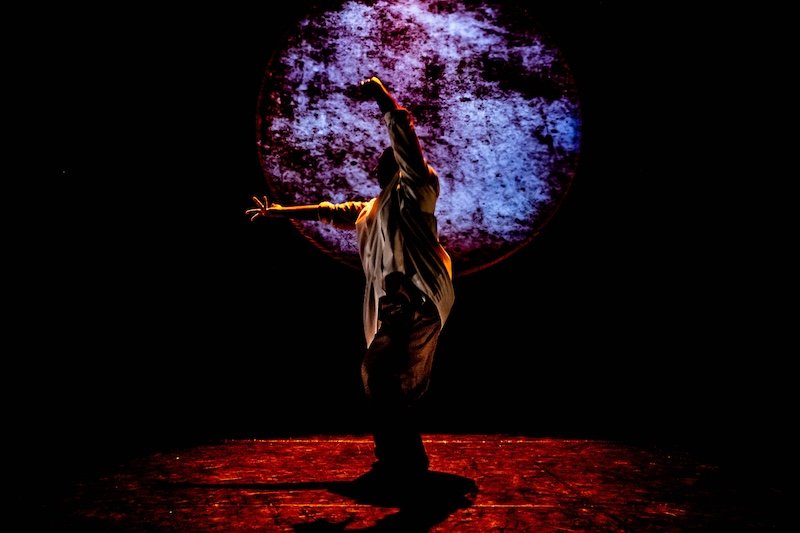
Image credit: Martin Dewar
Yet artists are often positioned as cultural informants, translating our traditions for institutions built on very different assumptions. Sometimes translation is necessary. But it isn’t neutral. When we translate our practice into vocabulary that already exists in Western arts institutions, that vocabulary quietly becomes the authority. We offer the familiar reference point and then:
“Hey, look! This exploration of Indian dance is actually doing something European dance and theatre thinkers have already identified!”
Suddenly, what was already there becomes legitimate because a Western theory has named it. I’m not arguing for the “purity” of South Asian Dance, nor against interdisciplinary practice. Quite the opposite: my own work is built on crossing forms, cultures and ways of thinking. What I am questioning is where the authority sits, and why we need a stamp of approval at all.
You may be thinking: “Shane… relax. They’re just words. Chill and get on with making work.”
Honestly, I would love to. But words have a habit of following us into funding applications, and that’s where the stamp of approval gets serious. Language doesn’t simply describe art. It frames it, and funders read the frame.
Because, finally, it costs money!
Imagine an early-career artist wanting to investigate bharatanatyam to discover their own artistic identity within it. That might involve movement, live music, poetry, character, visual storytelling. Artistically, it’s one enquiry. Financially, it’s often treated as several: the musician, dancer, dramaturg and designer each need a fee, rehearsal space costs money, and research and collaboration take time. Suddenly the question is no longer “What can I discover through my form?” but “Which parts of my form can I afford to discover?”
That is a very different question. If the conditions of making keep nudging us towards a solo rather than a group, recorded music rather than live musicians, a short development period rather than sustained research, then economics begin to shape the artistic possibilities. Not because anyone intended it, but because the structure around the form doesn’t reflect how the form actually works. That matters most for artists investigating their form rather than simply reproducing it.
There is a difference between saying “I am bringing dance, music, theatre and storytelling together” and saying “these things have never been entirely separate within the vocabulary I inherited.” One positions South Asian Dance as discovering interdisciplinarity. The other recognises what is already embedded in the form, and that changes what we ask resources to do. We don’t need them to help South Asian Dance cross over into other art forms. We need them so artists can investigate their forms as a whole, and let those forms evolve.
South Asian Dance shouldn’t have to demonstrate that it fits existing theories of dance or theatre. It should be recognised as a place where theory is being made. So the question isn’t: “Which Western theory helps us explain South Asian Dance?”
It’s: “What does South Asian Dance already know about performance that Western dance and theatre have yet to find the language for?”
That feels like a much more interesting conversation to me, and perhaps that is where the real opportunity lies: not just making space for South Asian Dance within the existing landscape, but giving artists the resources and freedom to expand the landscape itself.
Shane Shambhu- Creative Director of Altered Skin, interdisciplinary artist, theatre-maker, writer and curator.

