Adhish Arul practices street, hip-hop, and a range of African dances in London and the UK. Originally from Pondicherry, he came to London via Chennai.
Adhish started learning street dance in Chennai, and after abandoning a career in professional badminton following an injury, his focus turned to dance until it became an insatiable passion. Krithika Soma grew up in Singapore, and like many good Tamil girls, she attended Bharatanatyam, Contemporary dance and Carnatic vocal classes. When she came to the UK in 2024, she fell in love with learning Hip Hop and delving into the street dance scene. She continues to create between the threads of all her genres… and looks out for performance opportunities to keep her art alive.
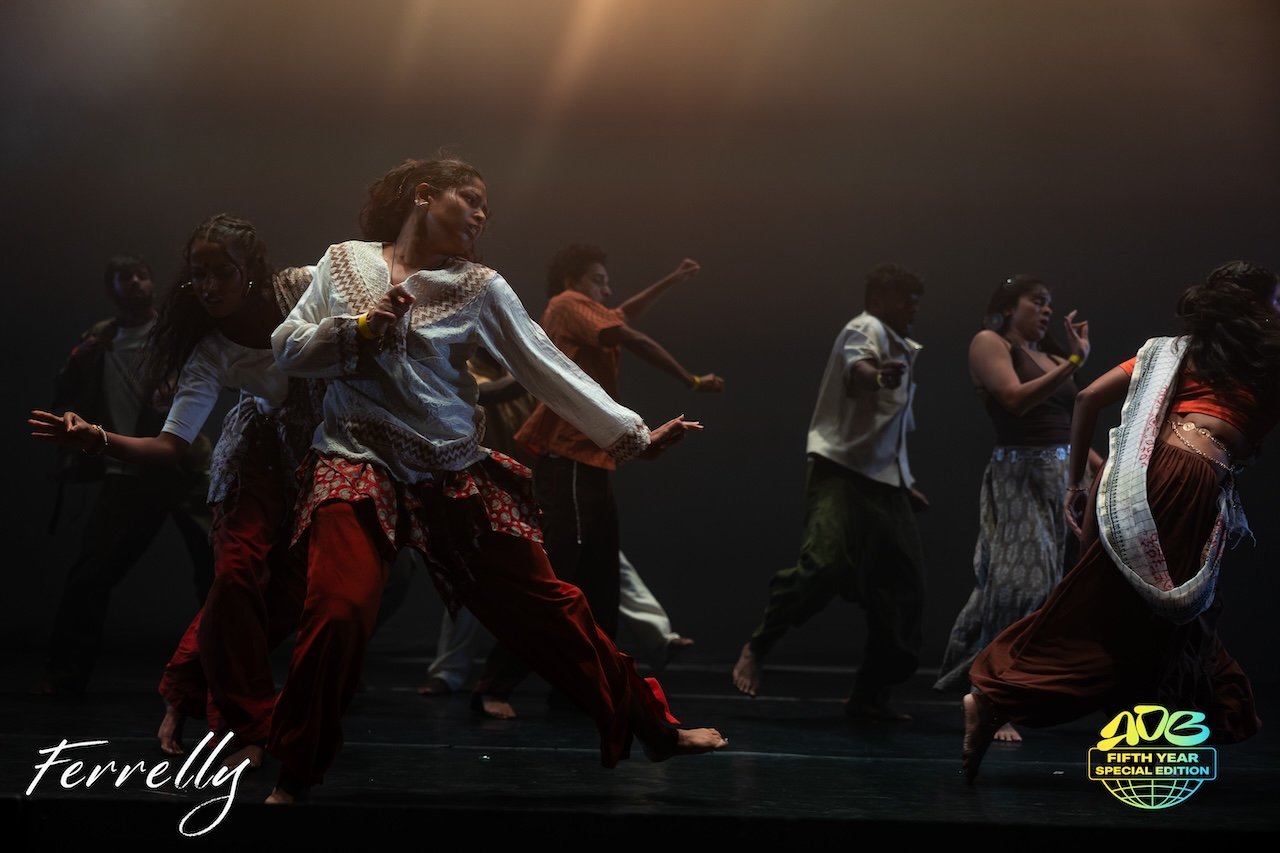
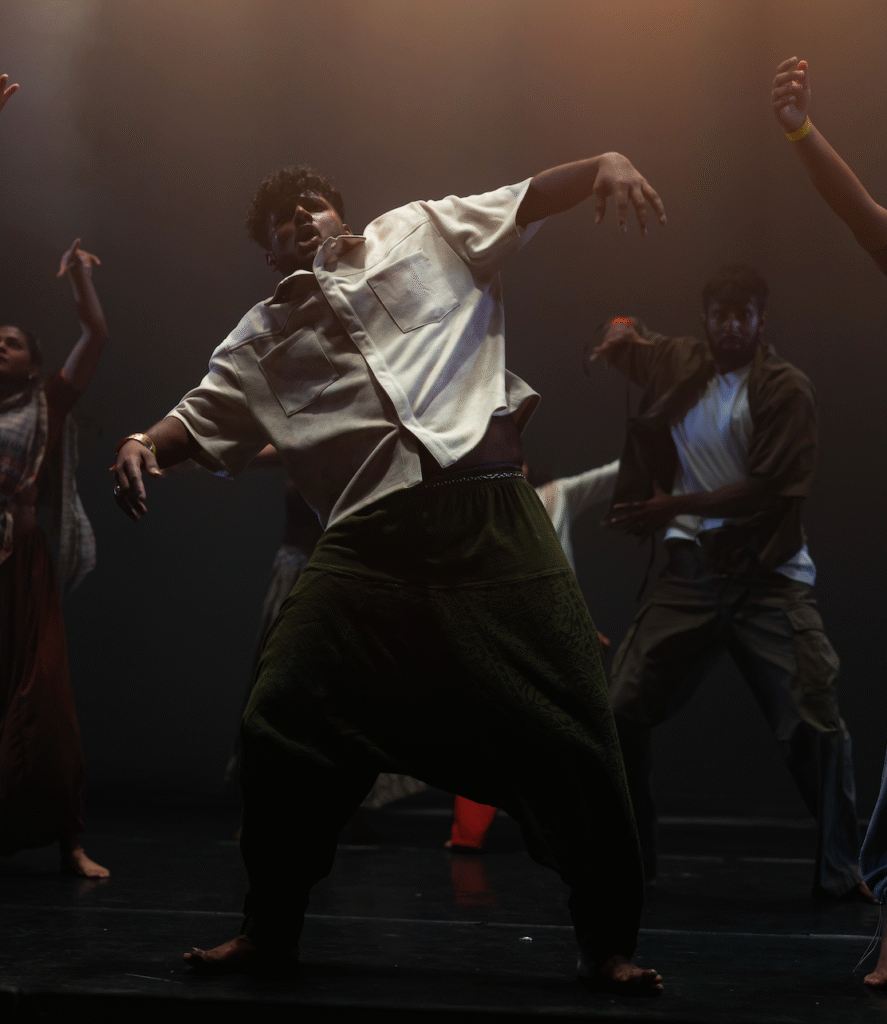
Adhish approached Krithika to collaborate on the new dance work, Between 8 and 1, which brings together the concepts of the spaces between the dominant beats- the first and the last beat (the sum) which start the new cycle. The choreographers in collaboration with Elsa Roy Gupta, wanted to celebrate the ‘process of becoming’ rather than the final product.’ They were conscious that they were bringing into dialogue the ‘rawness’ of Afro-Dance with the ‘classicism’ of bharatanatyam. How would the two dance forms find common ground? The premiere of Between 8 and 1 took place as part of Afro Dance Blast at Millfield Theatre in Edmonton, North London.
African dance is renowned for its energy, its fast-paced sequences with ensembles and joyful uninhibited free style movements. The contrast could not be more acute with a form like bharatanatyam which Shobana Jeyasingh remarked ‘retains the tension in the body rather than releasing it’. This point gave an opening to my conversation with Adhish Arul:
1.Q : Adhish I am thinking of the process which is so important for you – how did you start the conversation between your form of Street and Afro with Krithika’s formality of bharatanatyam. What devices did you use on the studio floor?
Last year, I had also engaged with bharatanatyam for Afro Dance Blast, but with a different approach. The conversation between both forms comes from having grown up around Indian traditional and folk forms. Both African dance and Indian dance styles have such deep tradition and culture – different but sharing similarities in its richness of heritage. My curiosity was always about how they would both look when in a shared space: a classical form made more relatable, street styles given more of our shared South Asian identity. By digging into both, I wanted to create a bridge, something fresh for people to enjoy, where both traditions keep their power but speak a new, shared language.
This time during our research and development sessions, I didn’t want to look at the genres we had as opposing styles, rather, I gave everyone the same prompt (for example, our recurring ‘walk’ motif that was developed through exploring the triple beat groove in Ghanian dance. With the same prompt and intention, I asked for all dancers to express that within their own style, and we went from there.
- Did you try and exchange movements between the two genres?
This time, I looked at all styles co-existing, rather than thinking specifically of fusing and blending. The exchange was a lot about grooves, rhythms and shapes for intention, so that each genre could still be authentic in its own right, and co-exist within the piece. This goes back to the piece’s narrative, of all of us navigating our own identities as migrants in London, in our own ways, and what that means for us. - Which elements in the dance did you feel came together in realising your vision?
I think the South Asian culture and identity elements really shone through. Especially through the motif of the kolam, which comes back in many ways throughout the piece, the sari as extensions of our identity and what we struggle to face, and the music. I had a lot of people coming up to me saying that they loved the music, which was inspired by modern African beats but with Indian melodies and instruments, big props to Sachin Nagarajan for working with me through several iterations for us to get there. I think that’s what touched me the most, is people saying that they would pay to watch this as a show by itself. It means a lot to me, to be able to bring the culture that I hold so close, to this treasured space, where I am a guest, and have been embraced. It’s a way for me to pay respect to both of these cultures, and see it as a deep form of both respect and representation. - I can see that you bring your Tamil identity into your work – the use of the kolam for instance and your wish to work with bharatanatyam dancers. Why is this important to you?
This piece was about identity. I am Tamil, that is my identity. There’s so much to say about my culture, and people don’t know unless someone speaks about it. I try to be one of the people who shares it. Growing up, I have watched more bharatanatyam dancers in temples in India, than I have watched street dancers in Africa. Not just bharatanatyam, there are also folk styles such as oyillatam and silambattam, forms with beautiful philosophies, that I engage with in my other works – styles that have a chance of being lost if we don’t continue to cherish them. - How have you personally, and your work been received by the African heritage community?
With so much love. I’m always welcomed by the community, and so much of what I do and what I have now, is all through the Afro dance community and the love that they show me. After every show, I always receive so much pure love for what I give, and it means a lot that I’m seen as someone who can show what fusion with Afro dance styles and culture can mean and can look like. As soon as I started the process, everyone welcomed the piece with love. I was given free studio spaces to explore my idea by homebros and Miss Olu (curator and MC) supported me throughout to make sure everything was in place. - Please describe African dance (apologise for this being a very broad term) to those with little or no exposure to it.
African dance consists of a variety of styles and history behind it. The dance forms we use to date are the modern African dance forms from different regions of Africa that have emerged from its own traditional dances with the influence of other street styles like hip hop, popping and other club styles. These dances carry history in the form of storytelling movement. Given the popularity of music in today’s world, the dance movements are becoming global too but it all started from the root of African sounds and heritage that speaks years of history. - Any future performances that you would like to flag up to our readers?
This piece was also a first rendition of a much larger vision: a 5-min snippet that we hope to continue working on. I’m looking to build this out with residencies, definitely more to come from this seed idea.
In Conversation with Krithika Soma:
- Krithika please tell us in a few lines something of your bharatanatyam training.
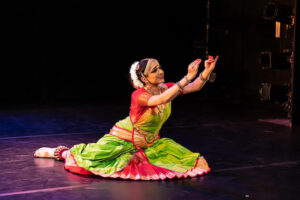
My movement practice is rooted in bharatanatyam and Contemporary dance, both forms I have been practising for two decades. My bharatanatyam training comes from Temple of Fine Arts Singapore, and Contemporary dance training from various places, including National University of Singapore and Temple of Fine Arts Singapore. Very recently, I have been exploring street styles in London, and have been interweaving all these threads. I believe in exploration with honesty and deep love for the integrity of each form that I practice.
- Which are the most significant performances of your career?
I think my creative attempts reflect a need to bring bharatanatyam into everyday feelings, experiences and spaces. One significant attempt was a full-length work titled Love All Around (2024), which I co-created with Madhuri Suresh and Varsha Vishwanath, commissioned by Esplanade Singapore. The piece was set in a movie theatre, about a chance encounter between three strangers who just watched a rom-com. It aimed to remind us of how love exists in so much more than ‘shringaram’/ traditionally understood ideas of romance.
Another significant moment from 2024 was competing in a regional crew battle called S24 with Under The Bridge; it was my first time immersing myself in a version of bharatanatyam that lived with hip hop and street styles. It was my first taste of how that felt in my body – a fundamental pivot point, and the reason I have gravitated towards the hip hop scene in London.
- When did you meet Adhish and you and Sneha decide to work with him?
I met Adhish at the London premiere of a show that I understudied (Caught Again in the Net of Rebirth), in February this year. We’ve since worked on a few creative projects together with Elsa Roy Gupta, that incorporate each of our experiences and our crafts, including a cypher-based live art installation, that we shared at Mauleti in May. I was involved in Between 8 & 1 from the early seed idea days, speaking through the concept and exploring how it could look like in our different styles.
I had asked Sneha Semaleesan, my dear friend who I’ve worked with before, to join us for the piece, towards the end of the process. She brought with her a lovely energy to collaborate and create with – it was with her that I co-created some of the more significant bharatanatyam motifs in the piece, including the interlocking arms portion.
- What challenges did you face and what in your view worked?
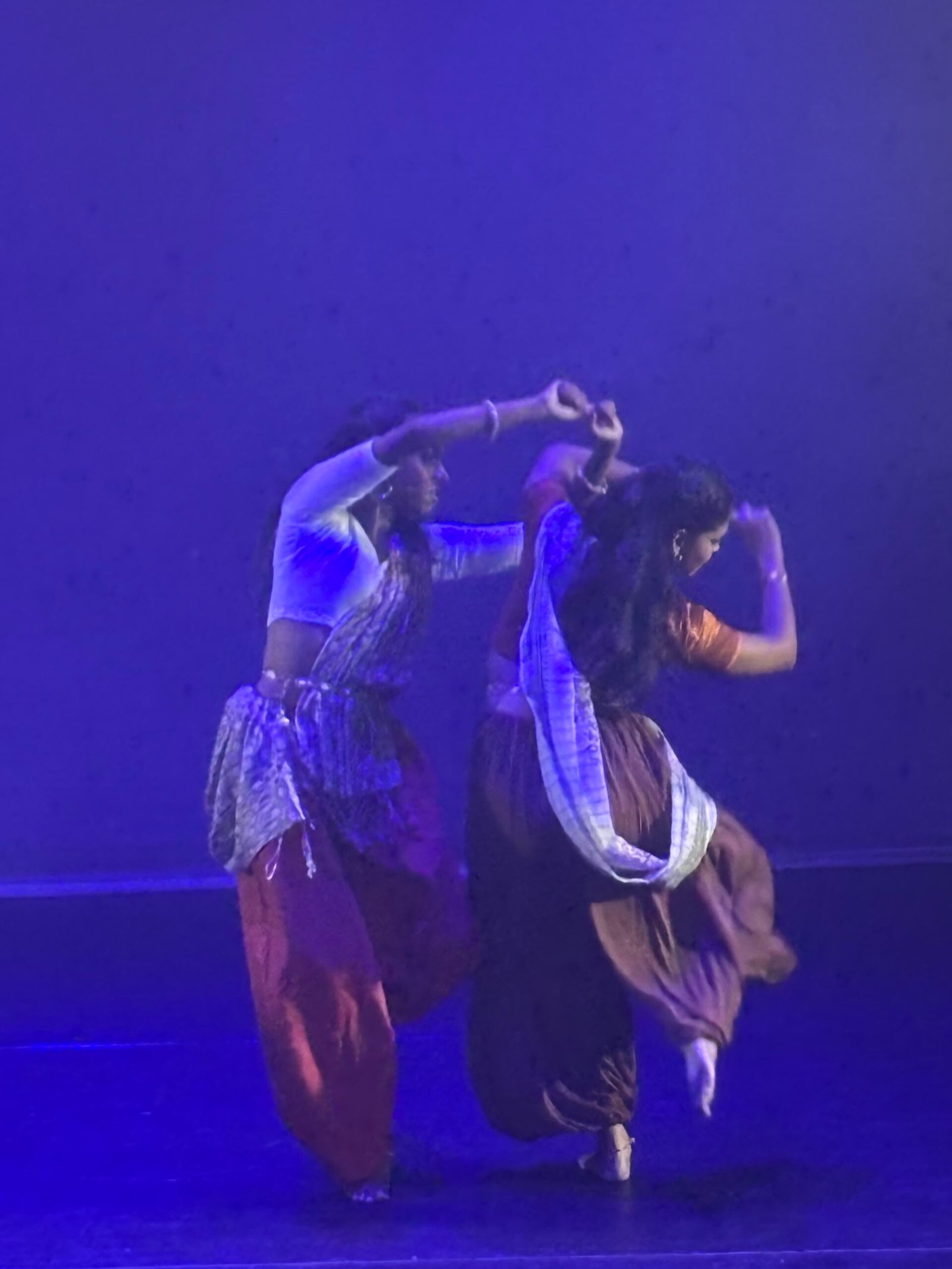
Every cross-genre collaboration comes with its own unique joys and challenges. For this project, I had chosen to stick to the bharatanatyam vocabulary, but not necessarily how movements are typically strung together, to serve the vision of different genres co-existing.
As this was Adhish’s vision, a lot of my initial work was to learn the modern Afro-inspired choreography that Adhish and Elsa created for the rest of the cast, and then to respond in bharatanatyam. I really value that process of learning; it taught me a lot about complementary ideation, and about musicality that is unique to Ghanian styles. One challenge was that I could only articulate ensemble ideas when Sneha joined us late in the process, so definitely would love more time for that in the future. And maybe next time, if we can ideate and exchange with bharatanatyam-led devices, it could lead to something differently exciting!
- Did you feel intimidated by performing as part of such a predominantly African dance platform?
The Afro dance community has always been so welcoming, be it in smaller jam sessions or even just in meeting people, I’ve always been met with such warmth. It was my first time being present for Afro Dance Blast, but the moment I entered the space, I was immediately comfortable. Everyone was so welcoming of me, of our entire cast. The love that they showed our piece, an extension of the love that they have for Elsa and Adhish, meant a lot. Watching every piece that I got to, watching Afro Queens, watching what Afro dance blast stood for, and listening to the closing speech by Olu, I feel like I got to witness the beating heart of the community in such a personal and beautiful way. I’m really grateful to have just been there, to witness and absorb it all. A testament to what a dance community can do, and what it can make you feel.
6. What are your hopes for the future?Sometimes carrying a classical form with you, comes with a responsibility attached; even in exploration, that it be led by intention. All I hope for, is to continue exploring my styles and craft with honesty and love, alongside people who carry this love with them.
7. Anything else that you would like to add?A direct quote from Sneha – “As someone who enjoys afro dance styles, especially Azonto, the space felt familiar yet so different. However, the mutual feeling (and responsibility) of sharing stories of identity and belonging is what eased me into the process.”
Artists of Between 8 and 1
Creative Director, Producer and Choreographer:
Adhish Arul
Choreographers:
Elsa Roy Gupta
Adhish Arul
Choreographers (Bharathanatyam):
Krithika Soma
Sneha Semaleesan
Dance Artists:
Vinu Jey
Mohamed Siddhique
Diya Claris Joseph
Kayode Anifowose
Saniya Shah
Elsa Roy Gupta
Krithika Soma
Sneha Semaleesan
Adhish Arul
Music Producer:
Sachin Nagarajan