
July 11, 2026
Gibney Studios, NYC
Written by Swati Seshadri for Line & Verse
Photo credit: Kishan Jangam
Chennai-based dance artist Divya Nayar brought Head in the Clouds to New York with the Dakshina Repertory (Sahana Rao, Niyathi Annamnedi, Sayujya Srinivasan) as part of a studio sharing presented by Rasa Collab. Sitting somewhere between lecture demonstration and performance, the informal presentation offered audiences a glimpse into Nayar’s choreographic process.
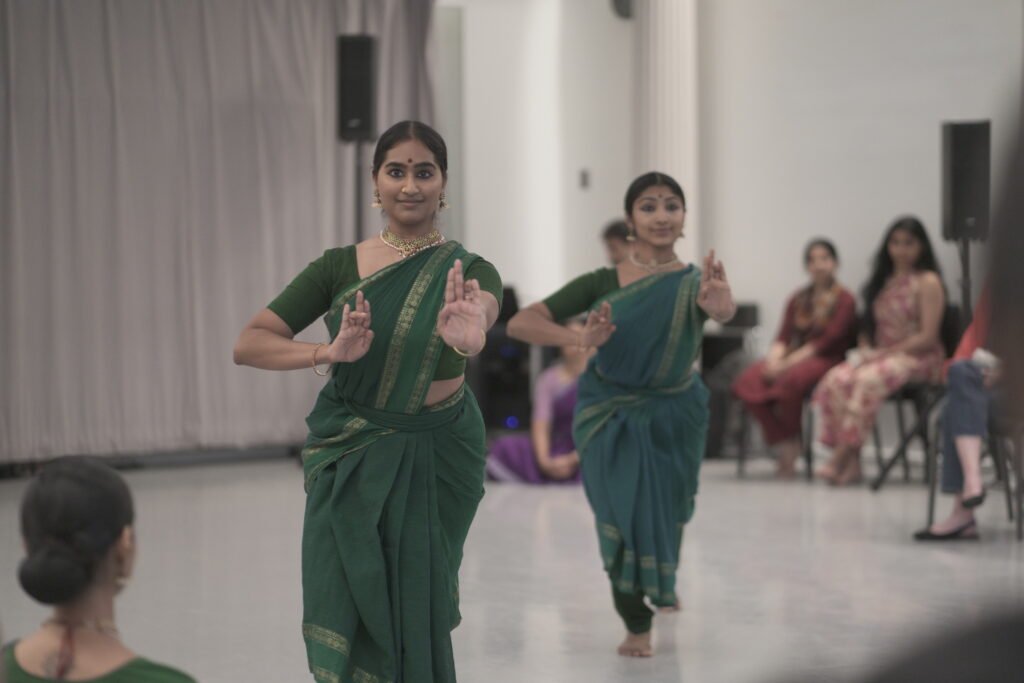
Following a lengthy introduction in which Nayar discussed her choreographic process, the dancers opened with Bharathiyar’s Agni Kunjondru Kanden. Though performed without salangai (ankle bells), the stamping feet became percussion in themselves, an effective reminder that Bharatanatyam’s musicality need not rely on external accompaniment. The ensemble danced with clarity, precision and confidence, with excellent cohesion.
Nayar introduced each subsequent work, generously sharing the ideas behind each composition. While thoughtful, these explanations interrupted the performance’s flow. The choreography itself was clear enough that much of this context would have sat better in programme notes, allowing audiences to experience the work directly before reflecting on its origins.
The second piece explored Nayar’s relationship with Carnatic gamakas and her desire to embody their fluid ornamentation through movement. In the Thodi Jatiswaram, Niyathi Annamnedi and Sayujya Srinivasan moved with ease and calmness. Particularly memorable were their beautiful extensions of the limbs, and the subtle choreographic variations within familiar Bharatanatyam vocabulary, such as delicate circular eye movements accompanying the taiya taiyi adavu.
Despite the duet’s polish, neither dancer’s individual personality emerged. Even moments of eye contact between the dancers were choreographed, making the piece feel uncomfortably rigid.
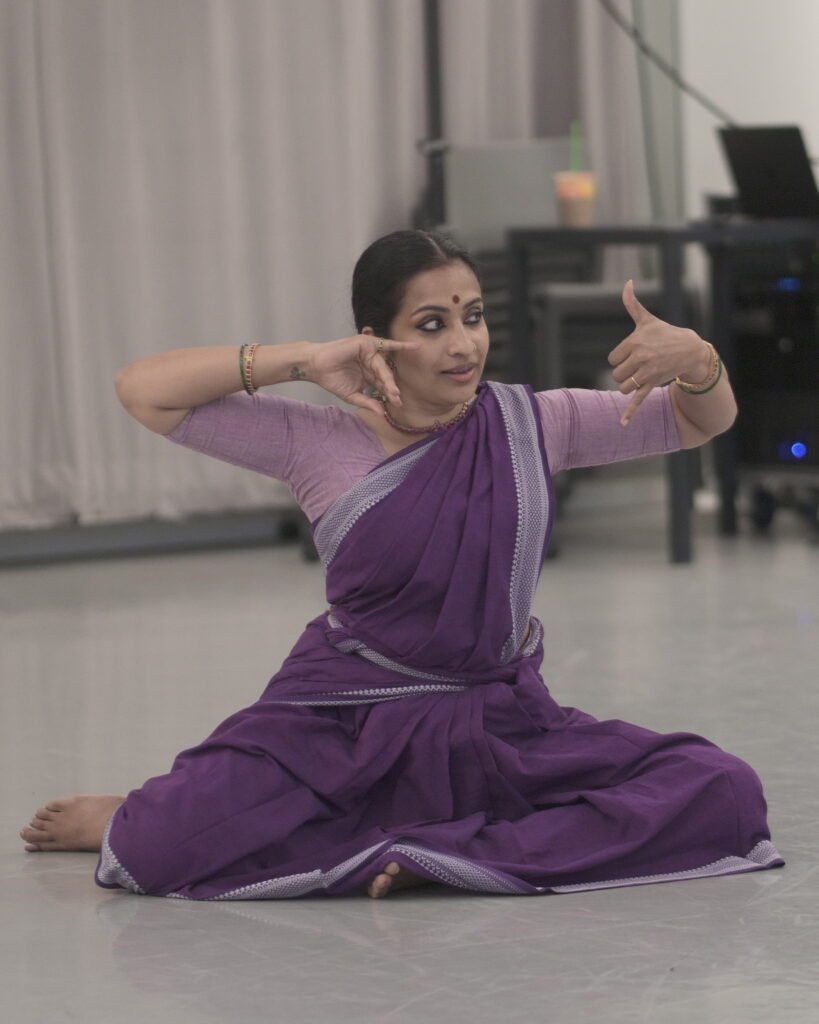
The third piece, an Ashtapadi by Jayadeva in Reetigowlai, depicts Radha asking Krishna to restore her adornments after their night together. Nayar sang the composition herself while seated on the floor performing abhinaya, creating an atmosphere of intimacy. Her voice was soulful and filled the studio with warmth.
Singing and dancing simultaneously demands a rare level of musicianship and physical control, and while Nayar navigated both with great skill, my attention was pulled continuously between voice, lyrics and abhinaya, with the two disciplines competing for focus rather than deepening one another.
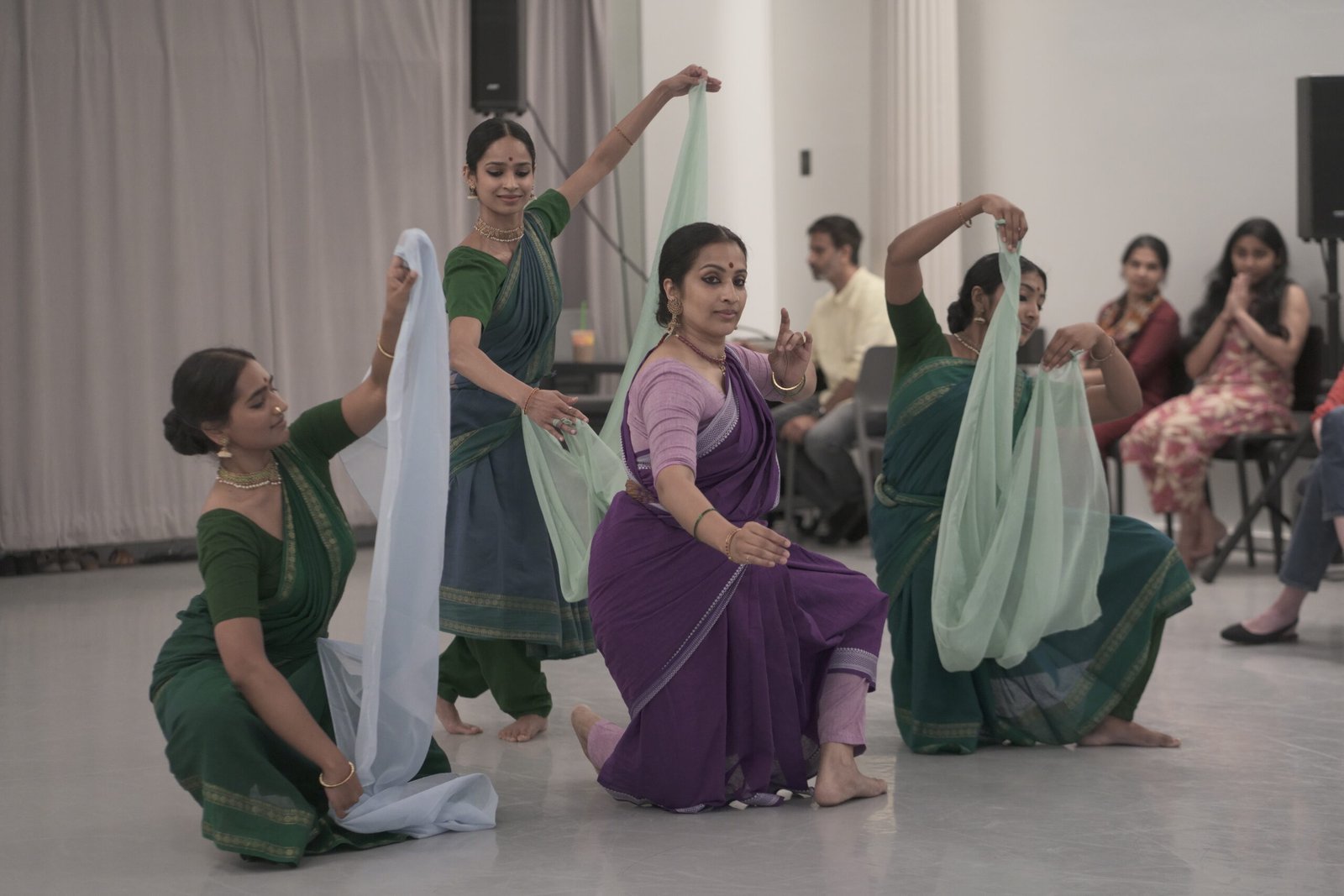
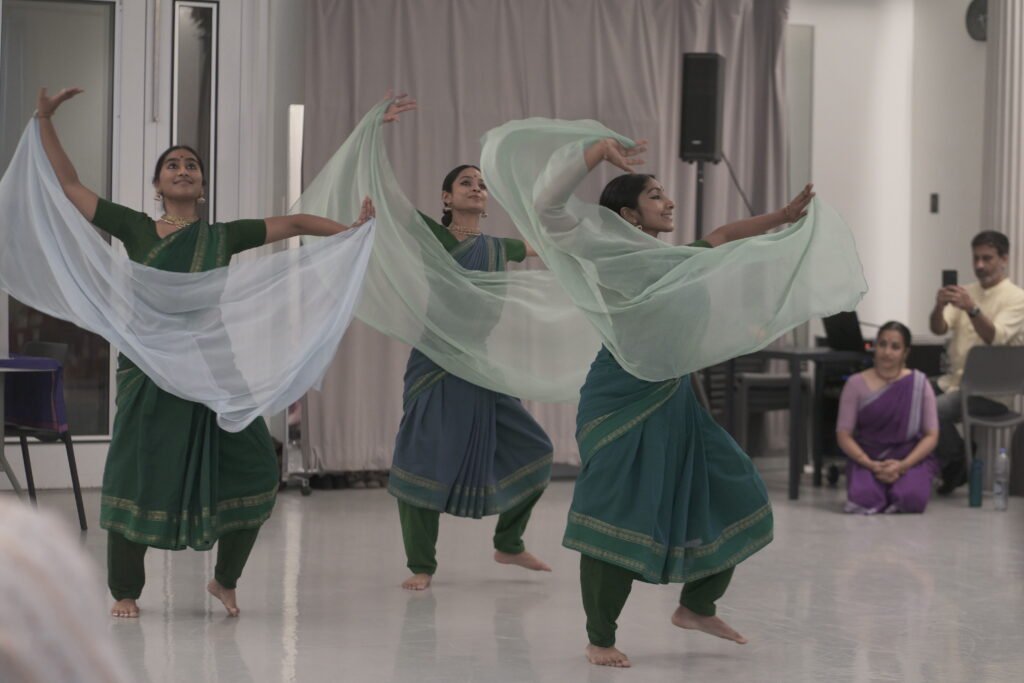
The evening closed with a composition in Brindavani depicting Ganga’s descent to Earth and Parvati’s growing unease as Shiva becomes captivated by the river’s arrival. The movement was fluid and the composition was crisp.
To evoke flowing water, the dancers manipulated long shawls rippling across the space, which to me, is an outdated choreographic device within the classical dance landscape. Performers as accomplished as these are entirely capable of embodying water’s many textures through movement alone. The shawls distracted from what the dancers were already communicating so effectively – and seemed to be distracting for the dancers themselves.
Across the evening, Dakshina Repertory demonstrated polished technique, and Nayar’s openness about her artistic process was genuinely welcome.
But, production considerations worked against the experience.
The electronic shruti, played from a mobile phone in the corner, produced a thin, tinny sound. In such an intimate space, playing the drone through the studio speakers would have enveloped the audience far more effectively.
The U-shaped seating faced the studio entrance, so every arrival and departure pulled focus.
Without lighting or wings to anchor the audience’s gaze, every visual element became part of the performance, including bags and shoes in plain view, dancers in the sidelines whispering or crossing the space mid-performance. In a stripped-back presentation, these details are amplified, and careful attention to the environment would have strengthened the work.
At just 45 minutes, including multiple spoken introductions, the sharing also felt frustratingly brief. I left wanting more – a testament to the performers’ artistry.
With greater attention to production detail and a willingness to trust both the choreography and the audience a little further, Head in the Clouds has greater potential to leave an even more lasting impression.
Rasa Collab is a New York City-based arts initiative founded by dancers and educators Ankita Khanna and Moneesha Kumar. It seeks to create meaningful spaces for Indian art, culture and community through performance, education, research, collaboration, storytelling and thoughtfully designed merchandise.

