By Ranjini Nair
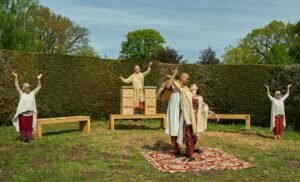
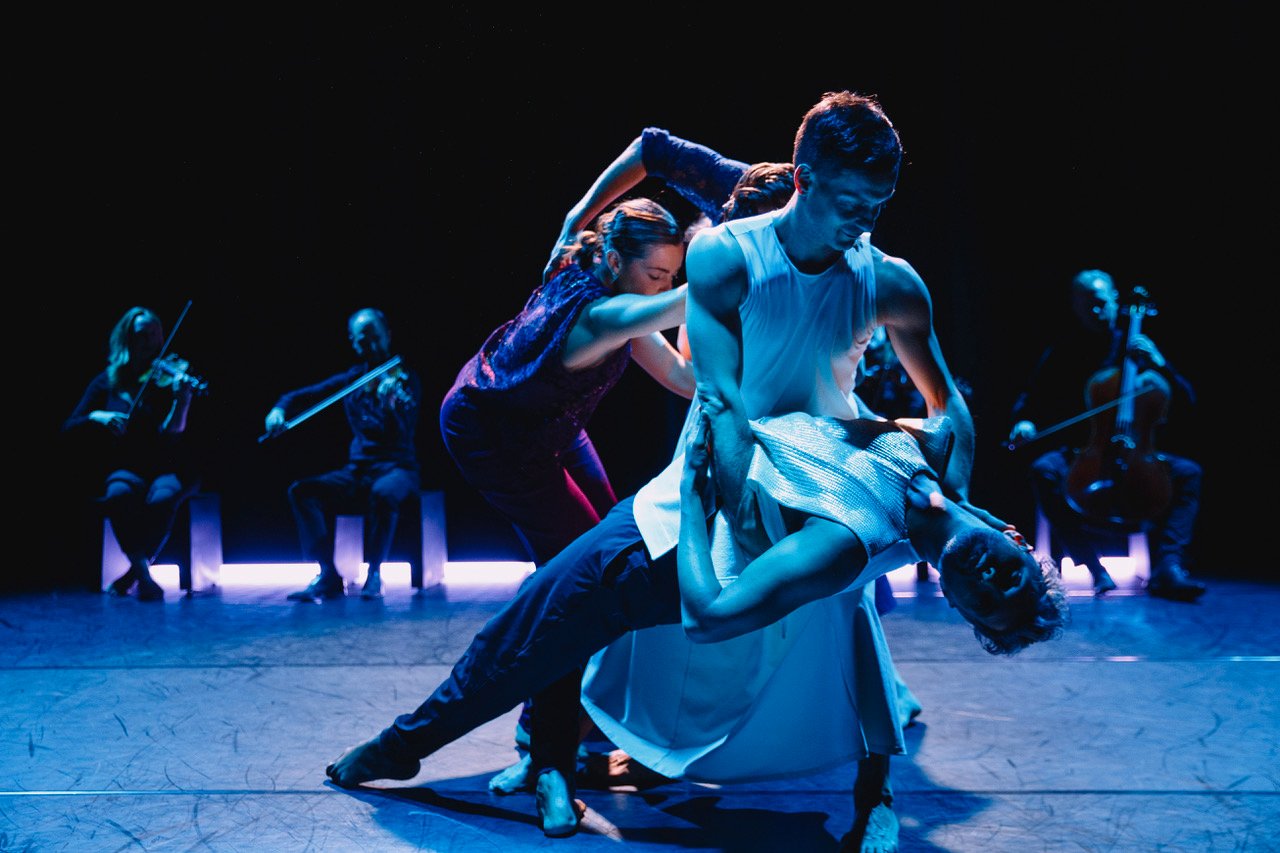
Image: Breathe 2023 credit: Bowie Verschuuren
For much of her career, the Dutch choreographer Kalpana Raghuraman has weaved through many worlds.
Born in the Netherlands to South Indian parents and trained in Bharatanatyam, she built a dance practice that refuses easy categorisation. Her work moves between Indian classical dance, contemporary choreography and theatre, while interrogating larger questions of history, identity and power.
Today, as the first Creative Associate of South Asian heritage to be appointed at the Dutch National Ballet, as well as Artistic Director of KalpanArts, she finds herself at the centre of conversations about decolonising dance institutions. She describes her career not as a carefully planned journey but as “walking the pathless path”, and creating possibilities simply by continuing to move forward.
Kalpana’s first dance teacher was her mother, Sharadha Raghuraman who established one of the earliest Bharatanatyam schools in the Netherlands during the 1970s. At the time, there was little infrastructure for Indian classical dance. Unlike Britain, where larger South Asian communities sustained artistic traditions, the Dutch scene was comparatively small.
“My mother was one of the first people teaching Bharatanatyam here,” she recalls. “So naturally I learned from her.”
Her mother’s training took place in Chennai, where she studied within the Dandayudhapani Pillai lineage (under one of his cousins) before continuing with other teachers after her guru’s death.
In Kalpana’s decision to take up dance professionally, she recalls two forks in the roads that led her to where she is today. The first came up after pursuing a degree in cultural anthropology. Her research during the degree was centred around Bharatanatyam, and led her to Bangalore to carry it out, and on returning to the Netherlands, she was balancing dance with anthropological research for television and radio.
In the early 2000s, she entered a landscape with almost no support structures for Bharatanatyam. Realising that she couldn’t wait for things to happen, she decided to create opportunities for herself. She organised performances, invited musicians from India, handled publicity, sold tickets and produced entire tours independently.
“It was like no man’s land,” she says. “I sometimes think I was completely bananas. But I learned production, PR, administration, fundraising—everything.”
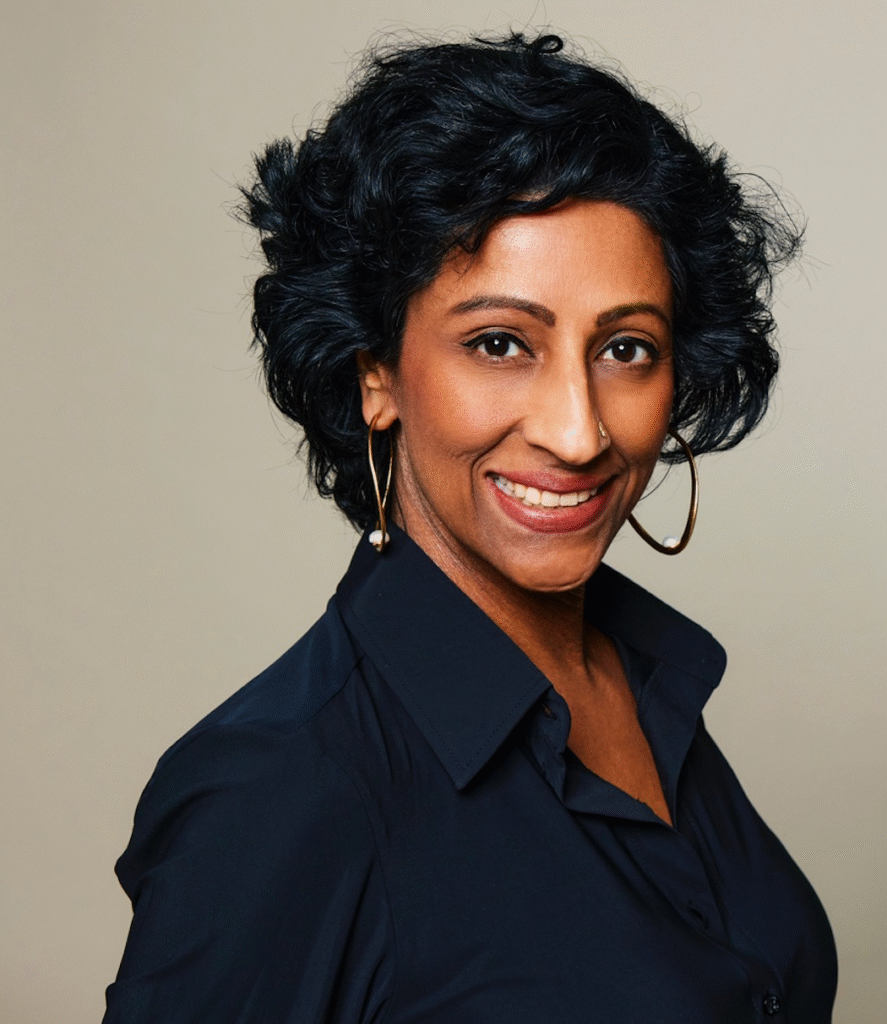
Image credit: Anne Van Zantwijk
Somewhere between this juggling, she realised there was a decision to be made.
“I realised I loved dancing far more than research. I thought, ‘Why am I doing this? I just want to dance.'”
And so she committed to her dance practice. She recalls how even getting the initial research and development funding from the National Arts Council was a huge step because of the relative invisibility and marginal status of Indian dance and its dancers. She began with carrying out the research first on herself, and then on her mother’s students, still very much rooted in the framework of Bharatanatyam.
The second fork came soon after in 2008, when she got a grant to make a production. Having trained in the intervening years in ballet and other contemporary styles, Kalpana no longer wanted to be defined by one artistic practice alone. She began to move beyond the vocabulary of bharatatyam.
“I had so much to say that I no longer wanted to limit myself to the form,” she recounts.
By 2011, she was an Artistic Associate at Korzo Theatre. Here she spearheaded the India Dance Festival, setting it up alongside the artistic director at the time. It is a testament to Kalpana’s vision that the festival outlived her own association with the theatre. When Kalpana left Korzo to start her own dance company KalpanArts with producer Giselle Terberg, they immediately applied for structural four-year funding. Receiving that funding transformed the company. Yet institutional recognition did not eliminate the challenges of working as a South Asian artist within European contemporary dance.
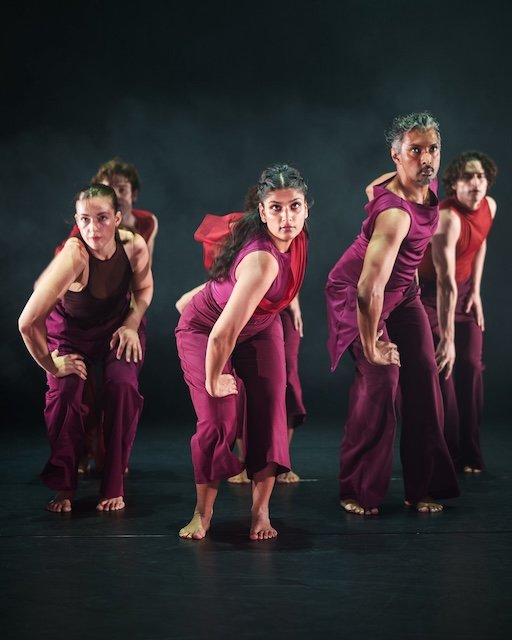
Image from Source 2026 credit: Michael Schnater
“People still don’t know enough,” she says. “There are so many clichés.”
Much of KalpanArts’ work therefore extends beyond performance itself. The company creates documentaries, educational materials, audience engagement projects and contextual programmes designed to dismantle orientalist assumptions surrounding Indian dance.
When asked about her appointment as Creative Associate at the Dutch National Ballet, where she became the first South Asian artist to occupy such a role, Kalpana reflects on why she established the India Dance Festival
“I’ve always seen myself as someone who can open the door for others—not just walk through it myself.”
She believes it is that commitment that informed her appointment at the National Ballet. Around 2019, when the artistic director of the Dutch National Ballet who had been following her work approached her to contribute to their upcoming production of La Bayadere, the idea was to work with the original ballet as it stood, which Raghuraman had reservations about. However, by the time the project began in 2023, things had changed and the ballet was now interested in creating their own version of La Bayadere, a conversation that Kalpana was more excited by.
Working closely with scholar Priya Srinivasan over three years, the production became an exercise in collaborative historical research and institutional negotiation. The central question revolved around how a ballet built upon orientalist fantasies could be performed today without reproducing those fantasies?
“The biggest problem was white bodies representing Indians,” she states.
The team considered relocating the story entirely before arriving at what became their guiding principle: instead of Europeans looking at India, the production would ask Europeans to look at themselves in India.
“It was about turning the mirror.”
Rather than portraying Indian priests, rajahs and temple dancers, the principal characters became Dutch colonial figures inspired by historical research led by Priya.The high Brahmin priest, for example, was transformed into a corrupt VOC merchant based on archival records of colonial officials. The production shifted geographically to a real Dutch fort near Chennai, incorporating nearby temples, colonial cemeteries and eclipse pavilions (ancient, open-pillared halls featuring intricate stone carvings depicting solar and lunar eclipses) into its visual world. The Dutch were no longer pretending to be Indians, instead they were made to confront their own colonial presence in India.
One of the production’s most significant interventions involved language itself. The creative team rejected the familiar description of the Bayadère as a “temple dancer.” Historically, they argue, these dancers occupied multiple social roles, performing in temples, courts, public festivals and travelling contexts. Colonial representations flattened that complexity into a singular exotic identity.
Through the ballet and other writings, “The West reduced her to the temple dancer.”
Throughout the production and accompanying publications, the term “temple dancer” disappeared. She became simply “the dancer.” For Kalpana this linguistic shift represented an act of historical restoration rather than political correctness. It acknowledged the multiple dancers belonging to varied communities whose history had long been simplified through colonial narratives.
Recognising the limits of their own perspectives and their own caste privilege, the creative team sought collaboration with artist and activist Tenma, whose work centres Dalit, Bahujan and Adivasi communities in Tamil Nadu.Rather than speaking for caste-oppressed communities, they sought to create space for those voices within the production. Films created by Tenma featuring artists from marginalised communities appeared throughout the ballet, interrupting and haunting the stage action. Their gaze reversed the traditional dynamics of spectatorship. In certain moments, it felt like the audience was the watched rather than doing the watching.The intervention complicated who possesses authority to represent history. Yet she acknowledges the difficulty of translating caste politics within European institutions.
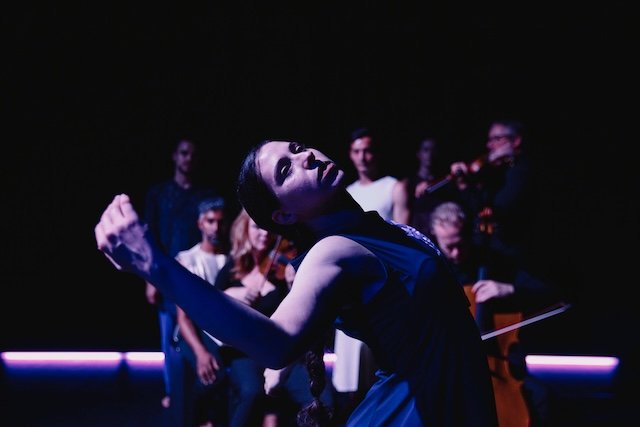
Image: Breathe credit: Bowie Verschuuren
“Caste is very hard to explain. People hear the word but don’t really understand its place within society.”
The collaboration therefore became less about fully resolving those complexities than ensuring they could not be ignored.
Kalpana reflects on how some departments in institutions get left behind in the conversations around decolonisation. She how she made sure to go and have conversations with teams such as the marketing and educational outreach team. The teams were surprised.“I mean, they were telling me like nobody, the associates usually just come, they make a show and they leave.”
And this is how the production generated conversations across every department of the Dutch National Ballet. Marketing teams reconsidered language. Programme writers revised historical framing. Dancers questioned inherited traditions. Some embraced the changes immediately, while others resisted.Many had grown up performing earlier versions of La Bayadère and viewed them as untouchable heritage.”But nobody is dancing Petipa’s original anyway,” Kalpana points out. “The ballet has always changed.”
For her, the project’s greatest achievement may not have been the production itself but the institutional process it initiated.
“It wasn’t only about making a new ballet. It was about beginning a process of decolonising.”
The dialogue continues in her recent ballet Source, created for three Dutch National Ballet dancers alongside three dancers from Kalpan Arts.The work questions the very idea of origins.Who owns cultural sources? Can origins ever be singular? How do ideas travel? Its accompanying context programme invited audiences to rethink familiar histories through examples such as the Indian origins of zero and the evolution of chess from Chaturanga.
“The question isn’t simply where something comes from,” she explains. “It’s who gets to claim it.”
Alongside her work with the ballet, she continues creating for Kalpan Arts, most recently developing Winged, a new collaboration with an internationally renowned percussion ensemble.
For Kalpana, one thing has remained across choreography, institutional change and cultural activism, in that she believes it is important to create future opportunities for those who come after her into the space.
Recognition by major institutions matters, she says, because it creates opportunities for those who come next. The path she has travelled often did not exist before she walked it. By opening institutions to new histories, new vocabularies and new collaborations, she hopes others will no longer have to create that path alone.